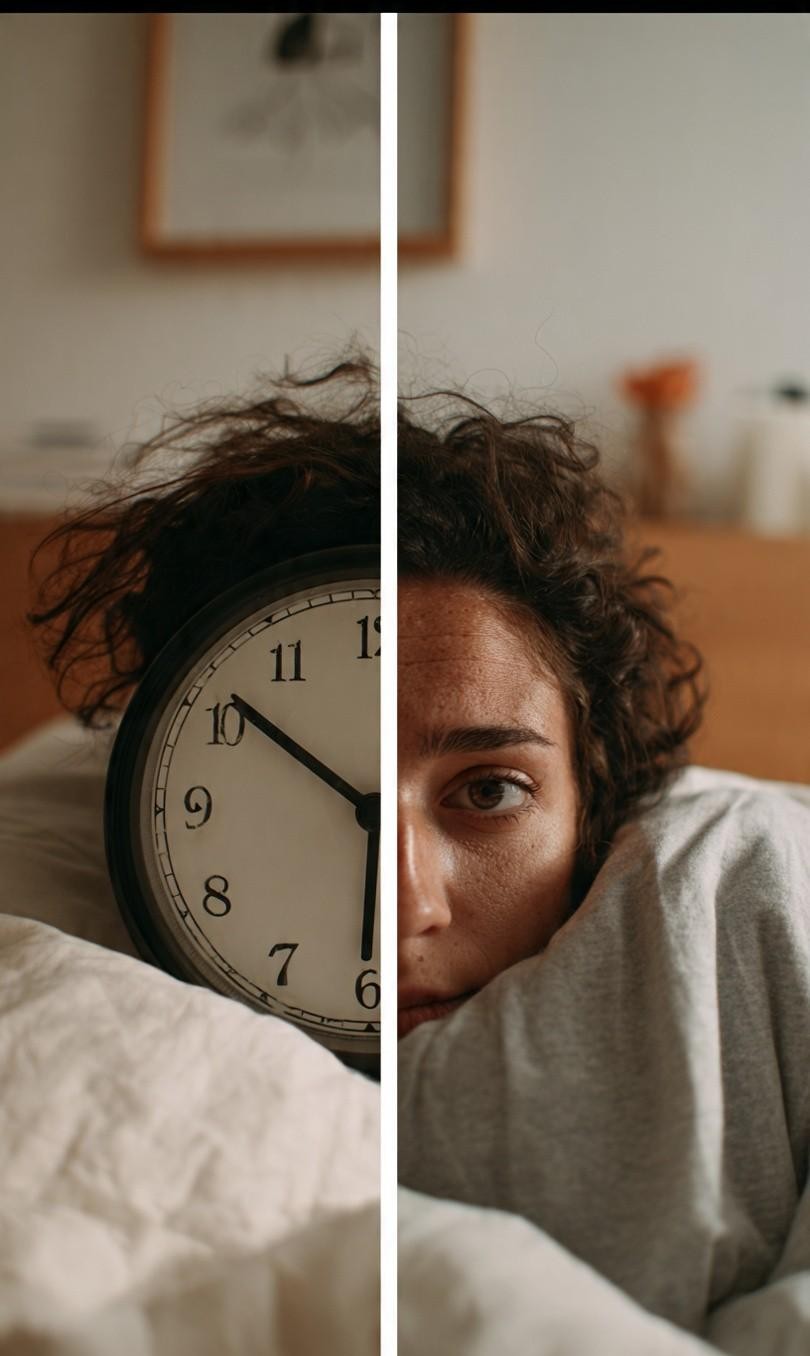
I used to think sleep was simple. You close your eyes, you get your eight hours, you wake up feeling human again.
That was the deal. That was what everyone said. Eight hours and you’re fine.
Except I was getting my eight hours. Sometimes even nine. And I was still waking up every single morning feeling like I hadn’t slept at all. Groggy, heavy, eyes that didn’t want to open, a body that felt like it was made of concrete. The alarm would go off and my first thought — before anything else — was how long until I could go back to sleep.
I thought I was just not a morning person. I thought it was normal. I thought everyone felt this way and just pushed through it better than I did.
I was wrong on all three counts.
The number was never the problem
Here is what I had completely missed — sleep isn’t just about hours. It is about quality. And quality is something you cannot see just by looking at a number on your phone.
You can spend eight hours in bed and still get terrible sleep. You can cycle through light sleep all night, barely dipping into the deep restorative stages your body actually needs, and wake up feeling worse than if you had slept for five hours straight and deeply.
The hours were never the issue. What was happening inside those hours was.
What was actually waking me up tired
Once I started paying attention — really paying attention — I noticed a few things I had been completely ignoring.
I was on my phone right up until the moment I closed my eyes. Sometimes I’d fall asleep mid-scroll, phone still in my hand, screen still glowing. I thought this was fine because I was tired enough to fall asleep anyway. What I didn’t realize was that the blue light from my screen was suppressing my melatonin — the hormone that tells my body it’s time for deep sleep. So even though I was unconscious, my body was not fully switching into the restorative mode it needed.
My room was never fully dark. There was always a little light creeping in — from the street, from a charging light, from the gap under the door. Small things. Things I had stopped noticing. But my brain noticed. Even tiny amounts of light during sleep can disrupt your sleep cycles and pull you into lighter stages when your body should be going deeper.
I was eating too close to bedtime. A late dinner, a snack at 11pm, sometimes both. Your body uses sleep to rest and repair — but if it is still busy digesting, it cannot fully commit to that process. I was asking my body to do two things at once all night and wondering why I woke up exhausted.
My sleep schedule was completely inconsistent. Weekdays I would try to sleep by eleven. Weekends I would be up until two or three and sleep in until ten. I thought the weekend sleep was making up for the week. It wasn’t. It was confusing my body clock, making it harder to fall into deep sleep at the right times, and leaving me feeling jet-lagged every Monday morning without ever getting on a plane.
The thing nobody mentions — sleep debt and stress
There is also something called sleep debt — the accumulated tiredness that builds up when your body doesn’t get the quality rest it needs night after night. You cannot repay it with one long sleep on a Sunday. It takes consistent, quality nights over time to actually recover.
And then there is stress. I was carrying a lot of it — the kind that doesn’t feel dramatic, just background noise. A low hum of worry that I had learned to live with. What I didn’t know is that stress keeps your cortisol levels elevated, and high cortisol at night is one of the most reliable ways to destroy sleep quality. Your body is supposed to be in a calm, safe state to sleep deeply. Stress tells it the opposite.
I was falling asleep exhausted every night and waking up exhausted every morning, and the eight hours in between were doing far less for me than I thought.
What I actually changed
I put my phone down thirty minutes before sleeping. Not in another room — I wasn’t ready for that — but face down, notifications off, screen dark. Just thirty minutes of nothing. Reading, lying quietly, letting my mind slow down on its own.
I made my room darker. Blackout curtains changed things more than I expected. The difference between sleeping in a dim room and a properly dark room is something you have to experience to believe.
I fixed my sleep and wake time. Same time every day — including weekends. Not perfectly, but consistently enough that my body started to trust the schedule. Within two weeks I was waking up just before my alarm, which had never happened to me before in my life.
I stopped eating after 8pm. This one was hard. But within days I noticed I was sleeping more deeply and waking up feeling lighter.
I also started winding down intentionally. Not dramatically — no elaborate routines. Just a signal to my body that the day was ending. A warm shower. Dimming the lights an hour before bed. Keeping the evening quieter than the rest of the day.
What changed
I won’t pretend it was instant. The first week of fixing my schedule I felt worse before I felt better — my body was recalibrating and it was uncomfortable.
But by week three something shifted. I started waking up and not immediately wanting to go back to sleep. I started having mornings where I felt — not energetic exactly, but okay. Present. Ready.
That sounds like a small thing. For me it was enormous.
Eight hours of bad sleep will always leave you more tired than six hours of good sleep. The number on the clock means nothing if what is happening inside those hours is working against you.
Your body wants to rest. It wants to recover. It wants to give you the morning you keep hoping for. You just have to stop getting in its way.