
eM1i5ISxWu3jPHusH-h-gEyTdmWkUiDw3kvO46j5xeA productivity | Quiet Growth U

Tag: productivity

  • The Anti-Hustle Guide to a Better Life

    The Anti-Hustle Guide to a Better Life

    There was a version of me that wore exhaustion like a badge of honour.

    I was the person who stayed up until 2am working. Who skipped weekends because successful people don’t take days off. Who answered emails at midnight and felt quietly proud of it. Who consumed every podcast, every book, every YouTube video about productivity and success and used them to convince myself that if I just worked harder, longer, and with more discipline, everything I wanted would eventually arrive.

    I believed in hustle culture completely. Not because someone forced it on me — because it felt true. Because the people selling it were compelling and the logic seemed sound. Work more, get more. Sacrifice now, reward later. Rest is for people who don’t want it badly enough.

    And then I burned out so completely that I couldn’t work at all.

    Not dramatically. Not in a way that looked like anything from the outside. I just gradually became unable to do the things I’d been doing — the focus wouldn’t come, the motivation had evaporated, and the thought of opening my laptop produced a physical resistance I’d never experienced before. I’d pushed so hard for so long that my body and mind had quietly decided they were done.

    That was the beginning of understanding what hustle culture had actually cost me — and what actually works instead.

    The lies hustle culture told me

    THE LIE 01

    More hours equals more results

    This is the foundational lie of hustle culture — and it sounds so reasonable that most people never question it. Of course more work produces more results. That’s just math. Except it isn’t. Cognitive performance degrades significantly after four to six hours of focused work. The seventh and eighth hours produce a fraction of the output of the first two — and they cost far more in recovery time than they contribute in productivity. Working twelve hours a day doesn’t produce three times the results of four. It often produces less, at lower quality, while accumulating a debt of exhaustion that compounds daily until it becomes impossible to repay.

    THE LIE 02

    Rest is laziness

    Hustle culture treats rest as the enemy of success — a weakness to be overcome, a concession to be minimized, something earned only after sufficient suffering. This is not just wrong. It is the opposite of true. Rest is when your brain consolidates learning, processes emotion, repairs the physical damage of stress, and prepares for the next period of output. Removing rest from the equation doesn’t make you more productive. It makes you progressively less capable — until eventually you’re putting in long hours and producing almost nothing of value while running on a reserve you stopped replenishing months ago.

    THE LIE 03

    Busyness means progress

    I was extraordinarily busy during my hustle years. Calendar full, inbox overflowing, always on, always responding, always doing something. And looking back, much of what I was doing was movement without direction — the feeling of productivity without the substance of it. Hustle culture rewards busyness because busyness is visible and measurable. But the most important work — thinking clearly, making good decisions, building something with real depth — requires space, not speed. The people who produce the most meaningful work over the longest time are rarely the busiest people in the room.

    THE LIE 04

    If you’re not suffering you’re not working hard enough

    There is a version of hustle culture that has romanticized suffering to a genuinely disturbing degree. The 4am wake-ups. The cold showers. The skipped meals. The pride in discomfort as proof of commitment. I bought into this completely — and what it produced in me was not strength or discipline. It produced a chronic state of low-grade misery that I’d learned to perform as dedication. Real, sustainable work doesn’t require suffering. It requires focus, clarity, and enough rest to bring genuine energy to what you’re doing. Suffering is not a prerequisite for achievement. It’s just suffering.

    THE LIE 05

    Your worth is your output

    This is the deepest and most damaging lie of all. Hustle culture, at its core, teaches you that you are what you produce. That your value as a person is directly proportional to your output, your achievements, your visible progress. Which means that rest, recovery, play, connection, and simply being alive are all either obstacles or rewards — never inherently valuable in themselves. When you internalize this, you stop being a person who works and become a worker who occasionally has to deal with the inconvenience of being human. That is not a sustainable or a worthwhile way to live.

    “I didn’t burn out because I was weak. I burned out because I had been taught that rest was weakness — and I believed it completely.”

    What actually works — the things hustle culture never told me

    WHAT WORKS 01

    Consistency over intensity — always

    Two hours of focused, rested, genuinely present work every day for a year produces more than ten-hour days of exhausted grinding for three months followed by a collapse. The compound effect of consistent effort is real and powerful — but it requires sustainability, which intensity actively destroys. The most productive people I’ve observed don’t work the longest hours. They work with the most consistency — same time, same focus, same commitment, day after day, with genuine rest between sessions. That boring consistency is what actually builds something over time.

    WHAT WORKS 02

    Deep work beats busy work every time

    One hour of genuinely focused, distraction-free work on the thing that actually matters is worth more than five hours of fragmented, interrupted, email-checking, notification-responding busyness. The shift from measuring hours worked to measuring depth of focus changed everything for me. I started protecting two hours every morning for the work that required my best thinking — phone away, notifications off, one task. Everything else — emails, admin, meetings, responses — happened in whatever time remained. My output improved significantly while my hours dropped. Quality of attention, it turns out, matters far more than quantity of time.

    WHAT WORKS 03

    Rest is part of the work — not a break from it

    When I started treating rest as a genuine investment in future performance rather than a guilty concession to weakness, everything changed. Sleep became non-negotiable — not because I gave myself permission to be lazy but because I understood that eight hours of sleep produced better work the next day than staying up two extra hours ever had. Walks, meals eaten without screens, evenings without work — these stopped being things I had to earn and became things I protected because I knew what they were worth. Rest is productive. It just doesn’t look like it from the outside.

    WHAT WORKS 04

    Doing less — better — is a superpower

    Hustle culture celebrates doing more. What actually produces results is doing fewer things with more care, more focus, and more consistency. When I stopped trying to work on ten projects simultaneously and committed to one or two with full attention, the quality of what I produced improved dramatically. The energy I’d been spreading across everything went into something — and something given genuine, sustained attention grows in a way that nothing divided across ten priorities ever can. Less is not a compromise. Done right, it is a strategy.

    WHAT WORKS 05

    Your life is not a warm-up for later

    Hustle culture is built on deferred living — the implicit promise that if you sacrifice enough now, you’ll get to actually live later. But later has a habit of not arriving in the form you expected. The relationships you neglected while hustling don’t automatically repair themselves when you slow down. The health you ignored doesn’t simply return when you finally have time to attend to it. The moments you missed — the ordinary Tuesday evenings, the unhurried conversations, the simple pleasure of doing nothing in particular — those don’t come back. Your life is happening now. Not after you’ve achieved enough to deserve it.

    The most radical thing you can do in a culture that glorifies overwork is to work sustainably — to protect your rest, honor your limits, and measure your success by the quality of your output and your life rather than the quantity of your hours. That is not the easy path. But it is the one that actually goes somewhere worth going.

    What I do differently now

    I work fewer hours than I did during my hustle years. I sleep more. I take evenings off without guilt and weekends without my laptop. I have a clear stopping time each day and I honor it even when there’s more to do — because there is always more to do, and the work expands to fill whatever time you give it.

    And here’s what’s true: I produce better work now than I did when I was grinding. Not in spite of the rest and the boundaries — because of them. The focus I bring to the hours I do work is genuine and sustained in a way it never was when I was exhausted. The decisions I make are clearer. The thinking is sharper. The ideas come more easily when there’s space for them to arrive.

    Hustle culture told me that rest was something I had to earn. What I discovered is that rest is something I have to protect — because without it, the work suffers, the person suffers, and eventually everything stops altogether.

    The permission you didn’t know you needed

    If you are somewhere in the middle of a hustle that is quietly hollowing you out — if you are busy and productive and successful by every external measure and privately running on nothing — I want to say this directly: you are allowed to stop. Not forever. Not irresponsibly. But you are allowed to rest without guilt, to work less without shame, and to question whether the pace you are keeping is actually taking you somewhere you want to go.

    Sustainable is not the same as slow. Consistent is not the same as comfortable. And a life built on genuine rest, focused work, and the quiet accumulation of things that actually matter is not a lesser version of success. It might be the only version worth having.

    You don’t have to hustle harder to build something meaningful. You just have to show up consistently, work with genuine focus, and rest without guilt. That’s the formula hustle culture never sold you — because it’s too quiet and too slow to go viral. But it works. Explore more on Quiet Growth for simple daily habits that support a calmer, more focused life.

  • How to Grow When You Have Zero Motivation and Zero Energy

    How to Grow When You Have Zero Motivation and Zero Energy

    For a long time, I kept a mental list of everything I was going to do once I felt motivated enough to do it.

    I was going to start exercising. Start journaling. Start eating better. Start waking up earlier. Start working on the things that mattered. I had plans, intentions, a general sense of the person I wanted to become. I just needed to feel ready first. I needed the energy, the spark, the motivation that everyone else seemed to have access to and I couldn’t quite locate in myself.

    So I waited. Days turned into weeks. Weeks into months. The list stayed. The motivation didn’t come.

    And somewhere in the middle of all that waiting, I realized something uncomfortable: motivation was never going to arrive on its own. I had been treating it like a weather front — something that would eventually roll in if I just held on long enough. But it wasn’t coming. And everything I wanted to do was sitting on the other side of a feeling I didn’t have.

    The motivation myth nobody warned me about

    We talk about motivation as though it’s a prerequisite for action. As though you need to feel ready before you can begin. As though the spark has to come first and the doing follows naturally after.

    But that’s almost never how it actually works.

    For most people, motivation follows action — not the other way around. You don’t feel like going for a walk and then go. You go, and halfway through you remember why you love it. You don’t feel like writing and then write brilliantly. You open the document and start badly and somewhere in the middle something shifts. You don’t feel energized and then begin. You begin, and the beginning generates its own small momentum.

    The waiting was the problem. Not the lack of motivation itself — but the belief that the motivation had to come before anything else could happen.

    “I wasn’t stuck because I had no motivation. I was stuck because I had convinced myself that motivation was the only way through.”

    What I did instead — and what actually moved things forward

    SHIFT 01

    I stopped waiting and started with the smallest possible thing

    Not the thing I wanted to do eventually. Not the full version of the habit. Just the smallest version I could do right now, in the state I was actually in. On days with zero energy, that meant one page instead of a chapter. One stretch instead of a workout. One glass of water before anything else. It felt almost insultingly small. But small was the only thing that was actually happening — and something happening, however small, is infinitely better than nothing happening while you wait to feel ready.

    SHIFT 02

    I separated identity from output

    On my lowest energy days, I stopped measuring success by what I produced and started measuring it by who I was being. Did I show up at all? Did I try even a little? Did I treat myself with some basic decency despite feeling terrible? Those things counted. They had to count. Because if the only days that mattered were the days when I was performing at full capacity, then most of my life was being written off as a failure — and that was never going to be a foundation for growth. Showing up badly is still showing up.

    SHIFT 03

    I looked at what was draining me instead of trying to generate more energy

    Most advice about low energy focuses on how to get more of it — better sleep, better diet, more exercise, cold showers, morning routines. And those things help. But I found it more useful to first look at what was consuming energy I didn’t have. Certain relationships left me hollow. Certain habits — endless scrolling, news consumption, comparison — were quiet drains I hadn’t accounted for. Removing one significant energy drain did more for my capacity to grow than adding three new positive habits. Sometimes the most productive thing is subtraction, not addition.

    SHIFT 04

    I redefined what growth looked like on hard days

    Growth doesn’t always look like progress. Sometimes it looks like maintenance — holding the line when everything in you wants to let it all go. Sometimes it looks like rest — genuinely choosing to recover rather than push through exhaustion that will only deepen. Sometimes it looks like one honest conversation, one small kindness to yourself, one moment of noticing something beautiful when you’d normally scroll past it. These things don’t show up on a habit tracker. But they are growth. Quiet, invisible, real growth that compounds over time into something you eventually look back on with genuine respect for yourself.

    SHIFT 05

    I stopped comparing my insides to everyone else’s outsides

    When motivation is low, social media is the worst possible place to spend time — and also the place most of us instinctively go. Everyone seems energized, productive, growing, achieving. Their mornings look peaceful and intentional. Their habits look effortless. Their progress looks linear and inevitable. None of that is the full picture. But when you’re already running on empty, it’s very hard to remember that. I had to make a deliberate choice to stop consuming other people’s highlight reels as though they were evidence of my inadequacy. My pace was my pace. My progress was my progress. Comparing the two to someone else’s performance was always going to lose.

    SHIFT 06

    I asked for less from myself — and got more

    The counterintuitive discovery at the heart of all of this is that lowering my expectations of myself on hard days actually produced more consistent output over time than demanding full performance every day. When the bar was set at “something — anything,” I almost always cleared it. When the bar was set at “perfect execution of the full routine,” I frequently missed it and then used the miss as a reason to give up entirely. A bar you consistently clear — however low — builds more momentum than a bar you consistently fail to reach, however ambitious.

    On your lowest days, the goal is not to thrive. The goal is to not quit. Staying in the game on the days when everything in you wants to check out is one of the most underrated forms of growth there is. It doesn’t look impressive. But it is.

    What zero motivation days are actually telling you

    Sometimes a persistent lack of motivation and energy is a signal worth listening to rather than overriding. Not always — sometimes it’s just a hard week and it passes. But sometimes it’s pointing at something real. Burnout that needs genuine recovery time. A direction that no longer fits who you’re becoming. A relationship or environment that is slowly consuming more than it gives. Grief that hasn’t been properly honored. A need for rest that has been postponed too many times.

    Pushing through all of these with more habits and more discipline will work for a while. Until it doesn’t. Learning to distinguish between the resistance that comes from growth discomfort — the kind worth pushing through — and the resistance that comes from genuine depletion — the kind worth listening to — is one of the most important pieces of self-knowledge you can develop.

    The permission you didn’t know you needed

    If you are reading this with zero motivation and zero energy, I want to say something directly: you don’t have to fix that today. You don’t have to override it or reframe it or find the bright side of it. You’re allowed to be in it for a little while.

    What you might be able to do — not to fix it, just to stay in the game — is one small thing. Not the whole routine. Not the full plan. Just one thing, the smallest one you can find, done imperfectly in the state you’re actually in.

    That’s not failure dressed up as success. That’s what growth actually looks like most of the time — unglamorous, slow, and happening in conditions that are never quite ideal. The motivation might come later. Or it might not come at all, and you’ll have grown anyway, one small imperfect step at a time.

    Either way, you’ll have moved. And moving — in any direction, at any speed — is always better than waiting.

    You don’t need to feel motivated to grow. You just need to do one small thing today — whatever the smallest possible version of forward looks like for you right now. That’s enough. It always has been. Explore more on Quiet Growth for simple daily habits that support a calmer, more focused life.

  • I Tried Every Productivity Hack to Build Self-Discipline. Nothing Worked — Until I Did This.

    I Tried Every Productivity Hack to Build Self-Discipline. Nothing Worked — Until I Did This.

    If you’ve tried every system and nothing has stuck — it’s not because you’re undisciplined. It’s because you’ve been solving the wrong problem. Start with one small habit tomorrow. Be curious when it’s hard. Come back when you drift. That’s the whole practice. Explore more on Quiet Growth for simple daily habits that support a calmer, more focused life.

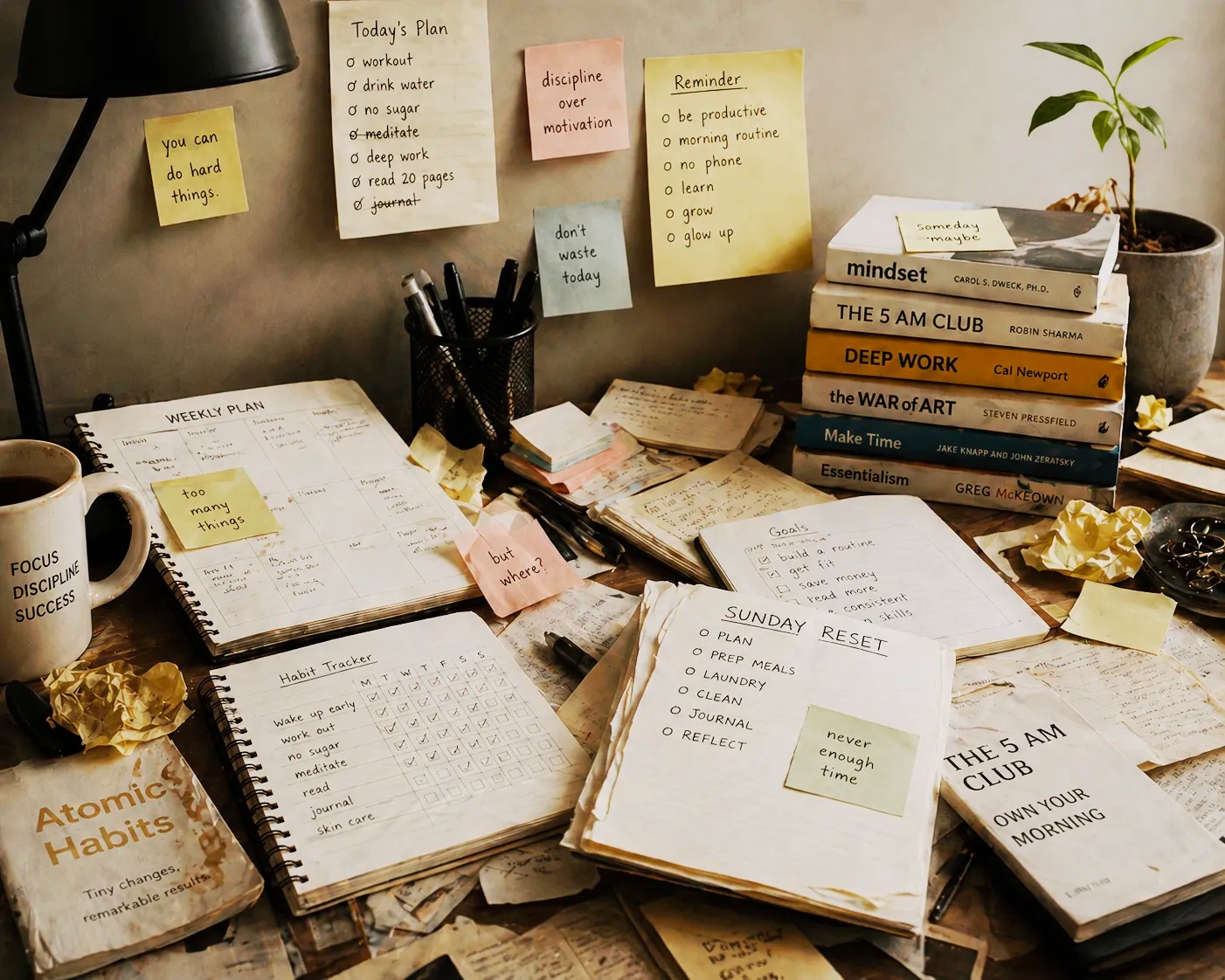
    I had a shelf full of self-help books. A color-coded planner. Three different habit tracking apps on my phone. I’d watched more YouTube videos about discipline and productivity than I’d like to admit. I knew about the Pomodoro technique, time blocking, the 5am club, cold showers, and the power of atomic habits.

    And yet — every single Monday, I was starting over. Same goals. Same intentions. Same quiet promise to myself that this week would be different.

    It never was.

    What I didn’t understand then — and what took me an embarrassingly long time to figure out — is that I was solving the wrong problem. I kept looking for a better system when what I actually needed was a completely different relationship with myself.

    The moment everything shifted

    It happened on a Tuesday evening. I’d missed the gym again. I’d opened my laptop to work on a project and ended up watching videos for two hours instead. I sat there feeling that familiar wave of self-disgust — the same internal monologue I’d had dozens of times before. “You’re so lazy. You have no discipline. What is wrong with you.”

    And then, for the first time, I stopped and actually listened to what I was saying to myself.

    I would never speak to a friend that way. Not once. If a friend told me they’d missed the gym and lost a couple of hours to distraction, I’d tell them it was fine, ask what got in the way, and help them think about tomorrow. I wouldn’t tell them they were fundamentally broken.

    So why was I doing it to myself — and expecting it to help?

    “Discipline built on self-criticism is like trying to grow a plant by stepping on it. The pressure doesn’t help it grow. It just damages the roots.”

    That night I didn’t download a new app or start a new system. I just sat with one question: what if being harsh with myself is actually the thing that’s been keeping me stuck?

    👉 Explore more on Quiet Growth to improve your mindset step by step.

    https://quietgrowthu.wordpress.com/2026/04/21/7-easy-steps-for-a-stress-free-morning-routine/

    What I learned about self-discipline that no productivity guru told me

    Over the months that followed, I started paying attention differently. Instead of asking “how do I force myself to do this,” I started asking “what is actually making this hard?” And the answers surprised me.

    INSIGHT 01

    Willpower was never the problem

    I’d spent years believing I simply didn’t have enough willpower — that other people had some reserve of mental strength I was born without. What I discovered is that willpower is a limited resource that depletes through the day for everyone. The people I admired for their discipline weren’t using more willpower than me. They’d built habits and environments that meant they needed almost none. They weren’t stronger. They were smarter about design.

    INSIGHT 02

    I was trying to change too much at once

    Every new system I tried involved overhauling my entire life simultaneously. New morning routine, new diet, new exercise habit, new work schedule — all at once, all perfectly. My brain was overwhelmed before I’d even started. When I finally committed to changing just one thing — one tiny thing — and doing only that for three weeks, something clicked. The habit stuck. And building on one solid habit turned out to be infinitely easier than trying to rebuild everything from scratch every Monday.

    INSIGHT 03

    Self-criticism was making things worse — not better

    Every time I criticized myself for failing, I increased the discomfort associated with the habit I was trying to build. My brain started linking the habit with shame and failure — which made avoidance more likely next time, not less. When I replaced self-criticism with curiosity — genuinely asking what got in the way rather than punishing myself for it — I started getting useful information instead of just feeling bad. And useful information led to actual change.

    INSIGHT 04

    My environment was working against me

    I had my phone on my desk while trying to work. I kept snacks in easy reach when I was trying to eat better. I had Netflix open in the background during “focus time.” I was relying entirely on willpower in an environment specifically designed to undermine it. When I changed my environment — phone in another room, workspace cleared, distractions physically removed — my behavior changed without me having to try nearly as hard. The discipline was in the design, not the doing.

    INSIGHT 05

    Rest was not the enemy of discipline

    I used to treat rest as a reward to be earned — something I’d allow myself once everything was done perfectly. But everything was never done perfectly, so I was always either pushing through exhaustion or collapsing into guilt-ridden rest. When I started planning rest deliberately — treating it as a requirement rather than a weakness — my consistency over time improved dramatically. A rested version of me showing up at 80% every day for six months produced more than a burned-out version grinding for three weeks and quitting.

    The most important shift wasn’t a new system or a better app. It was deciding to be on my own side. Discipline becomes sustainable the moment you stop treating yourself as the obstacle and start treating yourself as someone worth supporting.

    What actually changed — and what I do differently now

    I still miss days. I still drift sometimes. But the difference now is what happens next. Instead of a spiral of guilt that derails the whole week, I notice, I get curious, I adjust, and I come back. Usually by the next day. Sometimes the same evening.

    The returning is the discipline. Not the perfection.

    I have one habit I focus on at a time. My environment is set up to support me rather than tempt me. When something doesn’t work, I ask why instead of just pushing harder. I rest when I need to and I don’t apologise for it. And I celebrate small wins — genuinely, not as a performance — because the brain learns through positive feedback and I’ve stopped waiting for a grand achievement to feel good about my progress.

    None of this came from a new app or a better color-coded planner. It came from changing the question — from “how do I force myself” to “how do I support myself.”

    Where to start if you’re in the same place I was

    If any of this sounds familiar — the endless new systems, the Monday restarts, the self-criticism that feels productive but isn’t — here’s the simplest possible place to begin.

    Choose one habit. The smallest version of it you can imagine. Not “exercise every day” but “put on my shoes.” Not “journal every morning” but “open my notebook.” Do that one thing tomorrow. Notice how it feels. Be curious if it doesn’t happen. Come back the day after without guilt.

    That’s it. That’s the whole system. Everything else grows from there.

    You don’t need more discipline. You need a kinder, smarter relationship with yourself. Start there — and watch how much easier everything else becomes.

  • How to Stop Procrastinating — 7 Simple Strategies That Actually Work

    How to Stop Procrastinating — 7 Simple Strategies That Actually Work

    Procrastination isn’t laziness. If it were, it would be easy to fix — just try harder. But most people who procrastinate are not lazy. They’re overwhelmed, anxious, perfectionistic, or simply unsure where to begin. And the longer they wait, the harder starting becomes.

    Procrastination is not a character flaw — it’s a habit. And habits can be changed. Pick one strategy from this list and try it today — not tomorrow, not when you feel ready, but today. Even two minutes is enough to begin. Explore more on Quiet Growth for simple daily habits that support a calmer, more focused life.
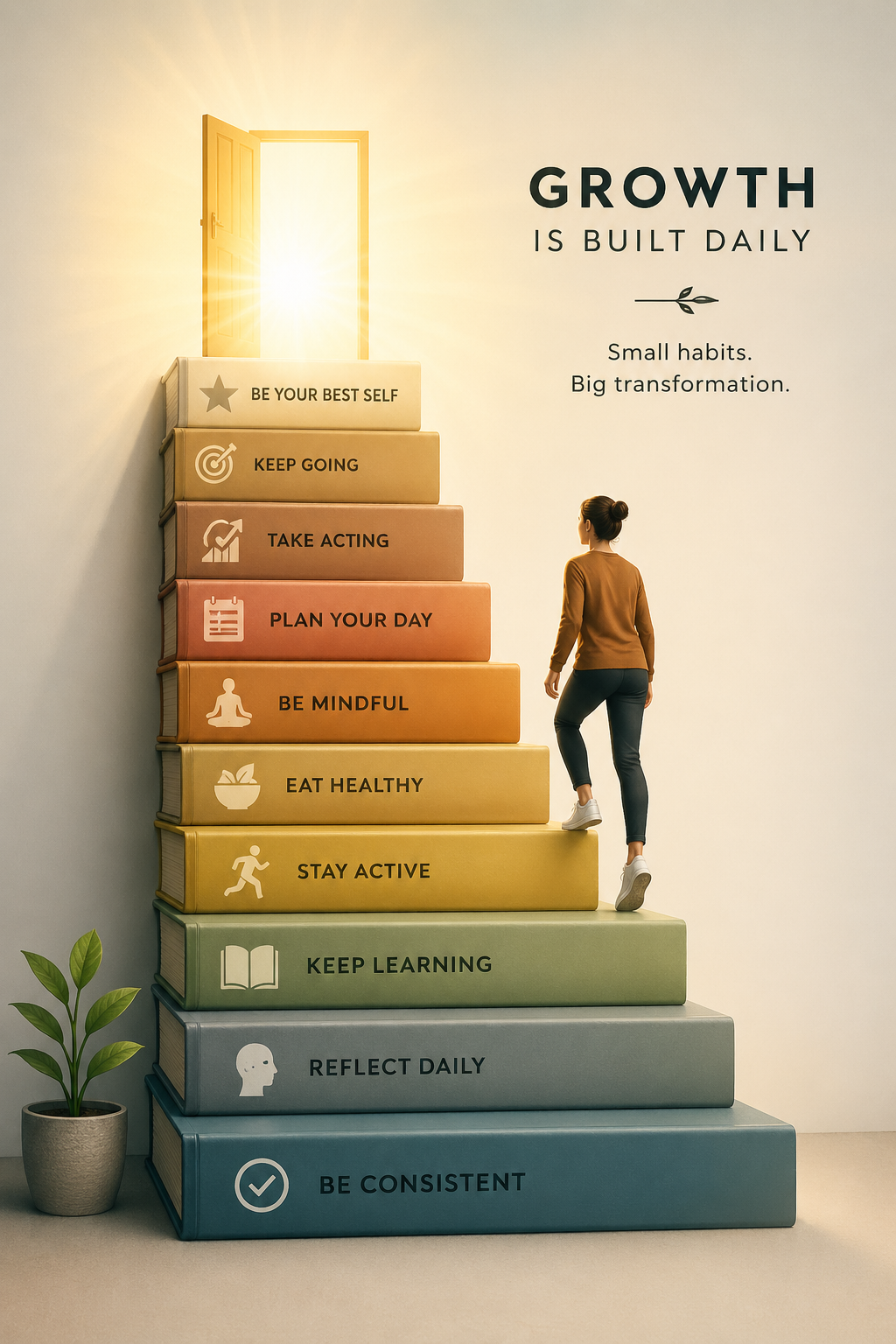
    The strategies in this guide don’t rely on willpower or motivation — because both of those are unreliable. Instead they work with how your brain actually functions, making it easier to start, easier to continue, and easier to build momentum even on the days when everything in you wants to put it off until tomorrow.

    Why we procrastinate — the real reason

    Most procrastination isn’t about the task itself. It’s about the feeling the task creates. Tasks that feel overwhelming, boring, unclear, or tied to a fear of failure or judgment are the ones we avoid most consistently. We’re not avoiding the work — we’re avoiding the discomfort the work brings up.

    This is why telling yourself to “just do it” rarely works for long. The discomfort is still there, and without a strategy to manage it, avoidance always wins. The fix isn’t more discipline — it’s reducing the discomfort enough that starting becomes possible.

    The goal isn’t to feel motivated before you start. The goal is to start before you feel motivated. Action almost always comes before motivation — not after. The feeling of wanting to do something usually follows the doing, not the other way around.

    👉 Explore more on Quiet Growth to improve your mindset step by step.

    https://quietgrowthu.wordpress.com/2026/04/16/how-to-build-a-positive-mindset-beginner-guide/

    7 strategies to stop procrastinating

    STRATEGY 01

    Make the task smaller than you think it needs to be

    The single most effective way to stop procrastinating on something is to shrink it until it feels almost embarrassingly small. Not “write the report” — but “open the document.” Not “clean the house” — but “put three things away.” Not “go for a run” — but “put on your running shoes.” The brain resists large, vague tasks because they feel threatening. Tiny, specific tasks feel manageable. And once you’ve started — once you’ve opened the document or put on the shoes — continuing becomes far easier than starting was. The hardest part of almost any task is the very first step. Make that step so small it would feel silly not to do it.

    STRATEGY 02

    Use a 2-minute timer to get started

    Tell yourself you’ll work on the thing for just 2 minutes. Set an actual timer. Two minutes is so short that your brain can’t reasonably object — there’s no threat, no overwhelm, no pressure. When the timer goes off, you have full permission to stop. Most of the time you won’t want to, because starting was the only thing standing between you and momentum. But even if you do stop after 2 minutes, you’ve broken the avoidance cycle for that day. Tomorrow, 2 minutes again. And gradually, the task that felt impossible becomes something you simply do.

    STRATEGY 03

    Remove the decision of when to start

    One of the most underrated causes of procrastination is decision fatigue around timing. “I’ll do it later” is infinitely easier than picking a specific time — and “later” almost always becomes tomorrow. The fix is to decide in advance, with as much specificity as possible, exactly when you will do the task. Not “I’ll work on it this afternoon” but “I will work on it at 3pm for 20 minutes, at my desk, before I check my phone.” The more specific the plan, the less mental negotiation happens in the moment. You’ve already decided — there’s nothing left to debate.

    STRATEGY 04

    Identify what specifically you’re avoiding

    When you notice you’re procrastinating, pause and ask yourself honestly: what is it about this task that I’m actually avoiding? Is it fear of doing it wrong? Not knowing where to start? Boredom? Anxiety about the outcome? The answer matters because different causes need different responses. If it’s fear of failure, remind yourself that a done imperfect thing is always better than a perfect thing that doesn’t exist. If it’s not knowing where to start, spend 5 minutes just writing down what you do know about the task. If it’s boredom, pair the task with something mildly enjoyable — good music, a comfortable spot, a favorite drink. Naming the real obstacle gives you something specific to address instead of just fighting a vague sense of resistance.

    STRATEGY 05

    Reduce friction before it starts

    Friction is anything that makes starting harder — a disorganized workspace, needing to find materials, having to set things up before you can begin. Every extra step between you and starting is an opportunity to give up and do something easier instead. Reduce that friction the night before. Lay out what you need. Open the document. Set up your workspace. Charge your laptop. Put your gym bag by the door. When you wake up or sit down, the task is already half begun — all that’s left is to continue. This is the same principle behind why meal prepping works, why laying out your clothes the night before makes mornings smoother, and why people who sleep in their workout clothes actually exercise more.

    STRATEGY 06

    Stop waiting to feel ready

    Readiness is a feeling, and feelings are unreliable indicators of when to act. Most people who consistently produce good work, finish projects, and follow through on goals don’t wait until they feel ready — they start anyway and let the feeling of readiness catch up. Waiting for the right mood, the right energy, the right inspiration, or the right circumstances is a form of procrastination dressed up as preparation. There will never be a perfect time. The conditions will never be ideal. You will never feel completely ready. Start now, in the conditions you have, with the energy you have. Good enough to begin is always better than perfect to never start.

    STRATEGY 07

    Forgive yourself for past procrastination — then move on

    Research consistently shows that people who forgive themselves for procrastinating are less likely to procrastinate again on the same task. Guilt and self-criticism feel productive — like they’re keeping you accountable — but they actually increase the discomfort associated with the task, making avoidance more likely, not less. When you’ve procrastinated on something, acknowledge it without judgment, decide what one small action you can take right now, and take it. That’s it. No lengthy self-analysis, no promises to do better, no elaborate new systems. Just one action, right now. The past is done. The only moment you can actually work in is this one.

    A simple daily plan to beat procrastination

    Here’s a practical structure to work with each day:

    You will still procrastinate sometimes — everyone does. The goal isn’t to never procrastinate again. It’s to notice it faster, recover from it quicker, and let it define fewer and fewer of your days over time. Progress, not perfection.

  • 10 Small Daily Habits for Self-Improvement That Actually Work

    10 Small Daily Habits for Self-Improvement That Actually Work

    Self-improvement doesn’t require a dramatic life overhaul. It doesn’t require expensive courses, a perfect schedule, or superhuman willpower. What it actually requires is far simpler — small daily habits, done consistently, over time.

    The science of habit formation backs this up. Tiny actions repeated daily create neural pathways in the brain that gradually make those actions automatic. And once a habit is automatic, it stops costing willpower — it just happens. That’s where real, lasting change comes from.

    Self-improvement isn’t about becoming a different person overnight. It’s about making slightly better choices, consistently, over a long period of time. Start with one habit from this list today. Do it tomorrow. And the day after. That’s how real change happens — quietly, gradually, and entirely within your reach. Explore more on Quiet Growth for simple daily habits that support a calmer, more focused life.

    Here are 10 small habits that are easy to start, realistic to maintain, and genuinely effective at improving your mindset, focus, and overall wellbeing.

    Don’t try to start all 10 at once. Pick 2 or 3 that feel most relevant to where you are right now. Do those consistently for two weeks. Then add one more. Slow, steady progress is what actually sticks.

    The 10 habits

    HABIT 01

    Start your day without your phone

    Give yourself at least 15 to 30 minutes of screen-free time after waking up. When you reach for your phone first thing, you immediately shift into a reactive state — responding to other people’s content, messages, and demands before you’ve even had a moment to yourself. Starting the day screen-free gives your mind a chance to wake up calmly and on its own terms. Use those first minutes for water, quiet, a short stretch, or simply sitting with a cup of tea. It’s a small boundary with a surprisingly large impact on how the rest of your day feels.

    HABIT 02

    Make your bed every morning

    This habit sounds almost too simple to matter — but there’s a reason it appears in almost every discussion of morning routines and discipline. Making your bed gives you an immediate, tangible win before the day has really started. It creates visual order in your space, which reduces background mental clutter. And it builds a small but real sense of follow-through — you said you’d do something, and you did it. That feeling compounds over time into a stronger relationship with consistency in other areas of your life.

    HABIT 03

    Write down your three priorities for the day

    A long to-do list creates the illusion of productivity while actually producing anxiety and decision fatigue. Instead, every morning write down the three things that genuinely matter today — the three tasks that, if completed, would make the day a success. Not everything on your list, just three. This clarity reduces the overwhelm of too many choices, keeps you focused on what actually moves things forward, and gives you a clear sense of accomplishment when those three things are done.

    HABIT 04

    Move your body for at least 10 minutes

    You don’t need a gym membership or a 45-minute workout to benefit from daily movement. Even 10 to 15 minutes of walking, stretching, or light exercise improves blood flow, releases endorphins, reduces cortisol, and sharpens mental focus. The key word is daily — consistent moderate movement has a greater impact on mental and physical health than occasional intense exercise. If fitting in a walk feels impossible, start with 5 minutes of stretching when you wake up. That alone is enough to shift how your body feels through the morning.

    HABIT 05

    Practice specific gratitude — not generic

    Writing “I’m grateful for my family and my health” every day quickly becomes automatic and stops having any real effect. The brain adapts to repetition and stops paying attention. Specific gratitude works differently — it forces your brain to actively search your day for something real and particular. “I’m grateful my colleague covered for me in that meeting today.” “I’m grateful the rain stopped just as I was leaving.” Three specific things each evening trains your brain to scan your day for positives rather than defaulting to what went wrong.

    HABIT 06

    Read for 10 minutes a day

    Ten minutes of daily reading adds up to roughly 12 to 15 books a year — more than most people read in a lifetime. But the benefit isn’t just the knowledge gained. Reading regularly builds focus and concentration in a way that most screen-based activities don’t. It also reduces stress — studies have found that just 6 minutes of reading can lower stress levels significantly by giving the mind something absorbing to focus on other than its own anxious thoughts. Start with whatever genuinely interests you, not what you feel you should be reading.

    HABIT 07

    Drink water consistently through the day

    Mild dehydration — the kind most people experience daily without realizing it — affects concentration, mood, and energy levels noticeably. You don’t need to track liters obsessively. Just start your morning with a full glass of water before coffee or tea, keep a water bottle visible at your desk, and drink a glass before each meal. These three simple anchors are enough to keep most people consistently hydrated without it becoming a chore. The effect on afternoon energy and mental clarity is real and noticeable within just a few days.

    HABIT 08

    Limit social media with intention

    The problem with social media isn’t the platforms themselves — it’s the mindless, habitual use. Picking up your phone out of boredom and scrolling for 40 minutes without meaning to is what drains your energy and focus. The fix isn’t to quit entirely — it’s to use it deliberately. Set a daily time limit in your phone settings, check it at set times rather than constantly, and do a periodic audit of who you follow. If an account regularly makes you feel worse about yourself or your life, unfollow it without guilt. Your feed should add value, not drain it.

    HABIT 09

    Spend 5 minutes reflecting before sleep

    Before you go to sleep, spend just 5 minutes asking yourself two questions: what went well today, and what’s one thing I can do differently tomorrow? This brief evening reflection builds self-awareness gradually over time — you start to notice patterns in your behavior, understand what drains you versus what energizes you, and make small adjustments that compound into real personal growth. It doesn’t need to be written down, though journaling amplifies the effect. Even just thinking through these questions quietly builds the habit of intentional, conscious living.

    HABIT 10

    Choose consistency over perfection every time

    This is less a habit and more a mindset shift that makes all the other habits possible. Perfectionism is one of the biggest hidden barriers to self-improvement — when the standard is “do it perfectly or don’t bother,” the result is usually “don’t bother.” Consistency doesn’t care about perfect days. It cares about showing up — even imperfectly, even briefly, even when you don’t feel like it. A 5-minute walk on a tired Tuesday counts. Three sentences in a journal when you meant to write a page counts. Showing up in any form keeps the habit alive. And a habit that stays alive eventually transforms into something powerful.

    How long before these habits make a difference

    Most people notice small but real shifts within the first 2 weeks of consistently following even 3 or 4 of these habits — better energy in the morning, a calmer mental state, more sense of direction through the day. The deeper changes in mindset and self-awareness typically develop over 6 to 8 weeks of consistent practice.

    The compound effect is real but it’s slow. Don’t expect dramatic transformation in a week. Expect small, almost invisible improvements that accumulate quietly until one day you look back and realize how far you’ve come from where you started.

    The 1% rule applies here — improving just 1% each day compounds into significant change over a year. You won’t feel the 1% on any given day. But you’ll feel the compounded result of 365 days of 1% improvements. That’s what consistent small habits build.

    👉 If you found this helpful, explore more posts on Quiet Growth

  • 6 Study Habits Every Successful Student Uses

    6 Study Habits Every Successful Student Uses

    Struggling to stay consistent with studying? Learn 6 simple study habits that actually stick — no coaching needed. Start small, stay consistent, and see real results.

    Have you ever sat down to study, stared at the page for 20 minutes, and then given up? You’re not lazy. You just haven’t built the right habits yet.

    The truth is, most people who struggle with studying aren’t lacking intelligence or discipline — they’re lacking a system. And a system doesn’t have to be complicated. It just has to be consistent.

    Here’s how to build study habits that actually work, even if you’ve failed before.

    Why most study routines fail

    The biggest mistake people make is trying to do too much at once. They plan 8-hour study sessions, try to cover everything in one day, and burn out by day three. Then they feel guilty, lose motivation, and stop entirely.

    Real, lasting habits are built in small steps — not big dramatic ones. Even 30 focused minutes a day will beat a 4-hour unfocused session every time.

    Start smaller than you think you need to. The goal for your first week is just to show up — not to study perfectly.

    6 simple study habits to build right now

    HABIT 01

    Study at the same time every day

    Your brain is a creature of habit. When you study at the same time daily, it stops feeling like a decision you have to make — it just becomes part of your routine. Pick a time that works for your energy levels. Early morning works for some people; right after work works for others. There’s no perfect time, just your time.

    HABIT 02

    Set one clear goal before you open your books

    Before every session, ask yourself: what is the one thing I want to understand or finish today? Not five things. One. This keeps you focused and gives you a small win at the end — which builds momentum for tomorrow.

    HABIT 03

    Use the 25-minute focus method

    Study for 25 minutes, then take a 5-minute break. This is called the Pomodoro technique and it’s surprisingly effective. Your brain stays sharp in short bursts. After 4 rounds, take a longer 20-minute break. You’ll be amazed how much you can get done without feeling drained.

    HABIT 04

    Revise what you learned the day before

    Spend the first 5–10 minutes of every session reviewing yesterday’s material. This is called spaced repetition, and it’s one of the most well-researched study techniques out there. It moves information from your short-term memory into long-term memory — which means you actually remember what you studied.

    HABIT 05

    Put your phone in another room

    This sounds simple, but it’s one of the highest-impact things you can do. Studies show that even having your phone on the desk — face down and silent — reduces your cognitive capacity. You don’t need willpower if your phone is in another room.

    HABIT 06

    End every session with a 2-minute brain dump

    When you’re done studying, spend 2 minutes writing down everything you remember from the session — without looking at your notes. This is called retrieval practice, and it’s one of the most effective ways to strengthen memory. It also shows you clearly what you’ve actually understood versus what you only think you understood.

    How to stay consistent (even on bad days)

    Consistency doesn’t mean studying perfectly every day. It means showing up even on the days you don’t feel like it — even if it’s just for 10 minutes.

    On tough days, lower the bar. Tell yourself: I’ll just open my notes and read for 10 minutes. Most of the time, you’ll keep going once you’ve started. And on the days you don’t, those 10 minutes still count.

    Track your streak. Even a simple dot on a calendar for every day you show up creates a visual chain you won’t want to break.

    A simple weekly study plan

    You don’t need a complicated timetable. Here’s a beginner-friendly structure you can adapt:

    Monday to Friday — one focused study session of 30 to 45 minutes. Saturday — light revision of the week’s material, no new content. Sunday — rest completely. Your brain consolidates learning while you rest.

    👉 Explore more on Quiet Growth to improve your mindset step by step.