
Tag: mood and food

  • Why Your Gut Health Is Quietly Running Your Mood — And What To Do About It

    Why Your Gut Health Is Quietly Running Your Mood — And What To Do About It

    For a long time I thought of my gut and my brain as separate systems that occasionally communicated in obvious ways — the nervous stomach before a difficult conversation, the loss of appetite when something went wrong, the way stress could make digestion uncomfortable. Those connections seemed self-evident and relatively minor. Background noise between two systems that otherwise operated independently.

    What I didn’t know — and what I found genuinely shocking when I first encountered it — is that the communication between your gut and your brain is not occasional, not minor, and not operating in the direction most people assume. Your gut is not just responding to your brain. Your gut is talking to your brain constantly, through a dedicated neural highway containing more nerve cells than your spinal cord, and it is influencing your mood, your anxiety levels, your stress response, and your cognitive function in ways that are measurable, significant, and almost entirely below the level of your conscious awareness.

    I discovered this not through research but through noticing — which is often how the most useful health discoveries happen. I noticed that my mood on days when my digestion was poor was consistently lower than on days when it wasn’t. I noticed that periods of high anxiety were almost always accompanied by gut discomfort, and that I had always assumed the anxiety caused the gut problem rather than considering that the relationship might run both ways. And I noticed that when I changed what I ate — gradually, imperfectly, without any dramatic protocol — something shifted in how I felt emotionally that I hadn’t been expecting and couldn’t initially explain.

    The second brain you didn’t know you had

    Your gut contains what neuroscientists call the enteric nervous system — a network of approximately 500 million neurons lining your gastrointestinal tract. This is why it is sometimes called the second brain. It is capable of operating independently of your central nervous system, regulating digestion without input from your head. But it is also in constant two-way communication with your brain through the Vagus nerve — one of the longest nerves in the body, running directly from your brainstem to your gut.

    What travels along this nerve is not just digestive information. It is mood-relevant neurochemical information. Your gut produces approximately 90 to 95 percent of the body’s serotonin — the neurotransmitter most associated with feelings of wellbeing, stability, and calm. It also produces significant quantities of dopamine, GABA, and other neurochemicals that directly affect how you feel. These are not produced in your brain and sent to your gut. They are produced in your gut and sent, via the Vagus nerve, to your brain.

    This means that the health of your gut microbiome — the trillions of bacteria, fungi, and other microorganisms living in your digestive tract — directly affects the quantity and quality of the neurochemicals available to your brain. A healthy, diverse microbiome supports robust neurotransmitter production. A depleted, imbalanced microbiome — caused by poor diet, chronic stress, antibiotics, or a lack of dietary fiber — produces less of the raw material your brain needs to regulate mood, manage anxiety, and maintain the baseline sense of emotional stability that most people take for granted until it starts to waver.

    “I had been treating my anxiety as a brain problem for years — with therapy and mindfulness and habit building. Nobody had suggested it might also be a gut problem. The research suggests it almost certainly was, at least in part.”

    What changed when I started paying attention to my gut

    The changes I made were not dramatic and they were not instant. I didn’t overhaul my diet overnight or start taking handfuls of supplements or follow a strict gut health protocol. I made a small number of consistent changes over several months and paid attention to what happened — which is a slower and less exciting story than most wellness content offers, but a more honest one.

    The first change was eating more fiber — specifically more diverse plant foods. The gut microbiome feeds on plant fiber, and dietary diversity directly supports microbial diversity, which is the single most important marker of a healthy gut. I added vegetables I hadn’t been eating, included more legumes, ate more whole grains. Not perfectly, not all at once — just more consistently than before. Over several weeks I noticed my digestion become more regular and less uncomfortable. And then, more gradually and more surprisingly, I noticed my baseline mood stabilize in a way I hadn’t expected.

    The second change was reducing ultra-processed food — not eliminating it, just reducing it. Ultra-processed foods are low in fibre and high in additives that research increasingly links to gut microbiome disruption. Eating less of them was, in effect, removing something that had been actively working against the microbial community my mood depends on. The effect was subtle but real — a reduction in the digestive discomfort that I had always assumed was just how my body worked, and which turned out to be at least partly a response to what I was regularly feeding it.

    The third change was managing stress differently — specifically because I learned that chronic stress directly damages the gut microbiome. The gut-brain axis runs in both directions, which means that just as gut health affects mood, chronic stress and anxiety affect gut health. This bidirectional relationship creates a cycle that can be difficult to interrupt from either end alone. The journaling, the breathing practices, the movement — things I had been doing for their direct mental health benefits — were also, it turned out, supporting my gut health indirectly. Everything connected in ways I hadn’t understood when I was treating each habit as a separate intervention.

    “Your gut and your brain are not separate systems that occasionally talk to each other. They are one interconnected system — and what you do for one, you do for the other.”

    The things that quietly damage gut health without you realizing

    Chronic stress is one of the most significant — and most overlooked — contributors to poor gut health. When your body is in a sustained state of stress, it reduces blood flow to the digestive system, alters gut motility, increases intestinal permeability, and directly disrupts the microbial balance of the gut. The anxiety that feels like a purely mental experience is simultaneously doing measurable damage to the physical system that produces a significant portion of your mood-regulating neurochemicals. This is one of the most compelling biological arguments for stress management that exists — not because stress is bad for your mind, which is obvious, but because it is bad for your gut, which then makes it worse for your mind.

    Poor sleep is another. Gut microbiome composition follows a circadian rhythm — the population and activity of gut bacteria changes in predictable patterns over the course of a day, regulated in part by your sleep-wake cycle. Disrupted sleep disrupts this rhythm, reducing microbial diversity and impairing the gut’s ability to produce the neurotransmitters your brain needs. Another bidirectional relationship — poor gut health also disrupts sleep, creating a cycle that neither system can easily break without the other being addressed.

    Antibiotics, while sometimes necessary, significantly deplete gut microbial diversity — and the recovery of that diversity after a course of antibiotics can take months without deliberate dietary support. This is not an argument against antibiotics. It is an argument for being aware of their effect on a system that matters for your mental health and taking active steps to support recovery afterwards.

    What actually supports gut health — simply and consistently

    Eat more plants — specifically more different kinds of plants. The research consistently points to dietary diversity as the most important driver of microbial diversity. Thirty different plant foods per week is the number most cited in the gut health research as a meaningful target — which sounds like a lot until you count individual spices, herbs, nuts, seeds, fruits, vegetables, and legumes as separate items. You are probably closer than you think, and moving meaningfully closer requires less dietary change than most people expect.

    Eat fermented foods regularly — yogurt, kefir, kimchi, sauerkraut, miso, kombucha. These introduce beneficial bacteria directly into the gut and have been shown in clinical research to increase microbial diversity and reduce inflammatory markers. You don’t need all of them. One or two incorporated consistently into your diet is enough to make a meaningful contribution.

    Manage stress — not just for your mind but explicitly for your gut. Every stress management practice you already do is also a gut health practice. Reframing it that way might make consistency easier on the days when the mental health motivation isn’t quite enough.

    Sleep consistently — for your gut as much as for your brain. The circadian regulation of your microbiome depends on predictable sleep-wake timing. Irregular sleep schedules disrupt gut function in ways that cascade into mood and cognition. Protecting your sleep is protecting your second brain.

    Drink water. Hydration supports gut motility, the transport of nutrients across the gut wall, and the overall health of the intestinal environment. Chronic mild dehydration — the kind most people experience daily — impairs gut function in ways that are subtle but cumulative.

    You don’t need a dramatic gut health protocol. You need consistent small improvements in what you eat, how you sleep, and how you manage stress — applied over months rather than days. The gut microbiome responds to sustained patterns, not short-term interventions. Start with one thing: add one new plant food to your diet this week. Just one. That is a meaningful beginning.

    The conversation nobody is having loudly enough

    Mental health conversations have become significantly more open and more honest in recent years — and that is genuinely important progress. But they still tend to focus almost exclusively on the psychological and the behavioral — on how we think, how we talk about our feelings, how we build habits and manage our minds. The biological substrate on which all of that psychology sits — the gut, the microbiome, the enteric nervous system, the Vagus nerve, the 90% of serotonin produced outside the brain — barely features in those conversations.

    I am not suggesting that gut health is the only factor in mental health, or that improving your diet will cure depression or resolve anxiety on its own. The picture is more complex than that and professional support remains important and valuable. But I am suggesting that a complete approach to mental wellbeing — one that actually addresses all the systems involved in how you feel — has to include the gut. Not as a replacement for everything else but as a foundational layer beneath it. The brain you are trying to take care of is deeply, biologically connected to the gut you have probably been ignoring. Taking care of one is taking care of the other.

    Start there. One more plant food this week. One serving of yogurt or kimchi. One night of consistent sleep. One less processed meal. Small, sustained, and over time — more significant than you currently expect.

    Your gut is talking to your brain right now — influencing how you feel, how you think, and how you respond to the day. The question is what you are giving it to work with. Start small. One more plant food this week. One fermented food added to your routine. That is enough to begin a conversation with your second brain. Explore more on Quiet Growth for simple daily habits that support a calmer, more focused life.


  • How a Simple Skincare Routine Became the Most Calming Part of My Day

    How a Simple Skincare Routine Became the Most Calming Part of My Day

    I never thought of myself as someone with a skincare routine. For most of my life, washing my face was something I did when I remembered to — a functional act, quick and thoughtless, squeezed between other things. The idea of a routine felt indulgent. Like something that required a certain kind of person, a certain amount of time, a certain level of caring about yourself that I wasn’t sure I had permission to access.

    What changed it wasn’t a new product or a beauty influencer or a sudden interest in how I looked. It was a particularly difficult period — the kind where everything feels slightly out of control and your grip on your own days feels loose and unreliable. And in the middle of that period, almost by accident, I started washing my face properly every morning and every night. Taking a full two minutes. Doing it slowly. Paying attention to what I was doing instead of rushing through it.

    And something shifted that I didn’t expect and couldn’t quite explain at first.

    What I noticed first

    The shift wasn’t in my skin — at least not initially. It was in how the day began and ended. There was something about having a small, consistent ritual at the bookends of my day that created a structure I hadn’t realized I was missing. The morning routine signaled that the day had properly begun — not with a screen, not with the immediate weight of everything that needed doing, but with two quiet minutes of doing something simple and kind for myself. The evening routine signaled that the day was over — that whatever had happened, whatever hadn’t been finished, whatever was waiting for tomorrow, could wait. Right now there was just this. Warm water. A clean face. The quiet end of one day and the beginning of the space before sleep.

    It sounds almost too small to matter. And I would have dismissed it entirely if I hadn’t noticed, with genuine surprise, how much calmer I felt on the days I did it versus the days I didn’t. The days I skipped — rushing straight from bed to screen in the morning, falling asleep without the evening ritual — had a slightly more chaotic quality. A feeling of having started and ended without intention. The days I kept the routine felt more mine. More deliberate. More like I was living them rather than being carried along by them.

    “A two-minute skincare routine didn’t fix anything that was wrong. But it gave me two minutes twice a day that were entirely mine — and in a difficult period, that turned out to matter enormously.”

    Why ritual works — even when it’s small

    There is a well-established psychological principle behind what I was experiencing without knowing it had a name. Routine and ritual create what psychologists call predictability — a sense that certain things will happen in a certain order regardless of what else the day brings. And predictability, particularly during periods of stress or uncertainty, is deeply calming to the nervous system. It is the opposite of chaos. It is a signal to your brain that not everything is unpredictable, that some things can be relied upon, that you have some agency over at least this small corner of your day.

    The skincare routine worked not because of what it did to my skin but because of what it did to my sense of structure. It was an anchor — a small, physical, sensory act that happened at the same time every day and required nothing from me except presence. No performance, no outcome, no measure of success or failure. Just the water, the products, the two minutes of attention. In a life that can feel like it is constantly demanding more than you have — more focus, more productivity, more discipline, more growth — those two minutes asked for nothing except that I show up for myself in the simplest possible way.

    And showing up for yourself in simple ways turns out to be more significant than it sounds. Because the accumulation of small acts of self-care — not grand gestures, not complicated routines, just consistent small things done with intention — gradually builds a relationship with yourself that is kinder and more reliable than the one most people have. Every time you keep the routine, you are sending yourself a message. I am worth two minutes of attention. I am worth this small act of care. I matter enough to do this consistently. Those messages, repeated twice daily over weeks and months, change something in how you feel about yourself in ways that are quiet and real and almost impossible to trace back to their source.

    What the routine actually taught me

    The first thing it taught me was presence. Skincare, done slowly and with attention, is inherently a mindfulness practice — though nobody calls it that. You are touching your own face. You are noticing temperature, texture, sensation. You are present in your body in a way that most of the day — spent in your head, in screens, in plans and worries and the future — does not require. Those two minutes of sensory attention are two minutes of genuine grounding, available every morning and every night without any additional effort, equipment or expertise.

    The second thing it taught me was consistency without pressure. A skincare routine is one of the only self-improvement habits that has no performance anxiety attached to it. You cannot do it wrong. There is no metric by which you can fail at washing your face. You either do it or you don’t — and if you don’t, tomorrow morning is right there, offering exactly the same opportunity without judgment. That forgiving quality made it easy to maintain in a way that more ambitious habits rarely are — and maintaining it, day after day, rebuilt my confidence in my own ability to be consistent with something, at a time when that confidence had taken some damage.

    The third thing was the physical act of caring for something. Your face is the part of yourself you present to the world every day. Taking care of it — not obsessively, not expensively, just consistently and with attention — is a form of respect for yourself that operates below the level of conscious thought. You are treating yourself as something worth maintaining. Worth paying attention to. Worth the two minutes it takes to do this properly. That sounds like a small thing. Over time, it does not feel small at all.

    “I didn’t start a skincare routine to look better. I kept it because it made me feel better — calmer, more structured, more like someone who takes care of themselves. The skin improved eventually. The mental shift came first.”

    What a mental health skincare routine actually looks like

    It does not need to be complicated or expensive. The mental health benefits of a skincare routine have nothing to do with the number of products or their price. They come entirely from the consistency, the intention, and the two minutes of undivided attention you give to yourself twice a day. A cleanser and a moisturizer — morning and night, every day, done slowly and with presence — is the complete version of this practice. Everything else is optional.

    What matters is that you do it at the same time every day — immediately after waking, before your phone, and immediately before sleep, after your phone is put away. These timings are not arbitrary. They make the routine a transition ritual — a physical signal that one state of the day is ending and another is beginning. The morning routine wakes you up gently and gives you something to do before the day’s demands arrive. The evening routine winds you down and creates a clear boundary between the day and sleep. Both of these functions are valuable for mental health regardless of what products you use to achieve them.

    Do it without your phone nearby. Do it in front of a mirror. Let it be the one part of your day where you look at yourself — not critically, not with assessment, just with the simple attention of someone doing something kind for themselves. That quality of attention, offered to yourself consistently, is rarer than it should be. And it matters more than most people expect.

    Tonight before you sleep, wash your face slowly. Two minutes. No phone, no rushing, no multitasking. Just the water and the quiet and the simple act of caring for yourself at the end of the day. Notice how it feels. Then do it again tomorrow morning. That is the entire practice — and it is enough.

    The thing nobody says about self-care

    Self-care has become a word so overused that it has almost lost its meaning — associated with bubble baths and expensive face masks and the performance of treating yourself rather than the substance of it. But real self-care is not a reward you give yourself after sufficient suffering. It is not a luxury for people with more time and money and mental health than you currently have. It is the daily practice of treating yourself as someone worth caring for — in small, consistent, unglamorous ways that nobody else will see and that do not require any particular resources except attention and intention.

    A skincare routine is one of the smallest and most accessible versions of that practice available to anyone. Two minutes. Twice a day. The same simple acts, repeated consistently, until they become a ritual — and a ritual, once established, becomes an anchor. And an anchor, in a life that can feel like it is constantly moving and shifting and demanding more than you have, is worth more than it looks like from the outside.

    Start tonight. Two minutes. That is all this asks.

    Tonight before you sleep — wash your face. Slowly, with attention, without your phone. Let those two minutes be entirely yours. Then do it again tomorrow morning. That small consistent act of caring for yourself is where it begins. Explore more on Quiet Growth for simple daily habits that support a calmer, more focused life.

  • Exercise Isn’t Just for Fitness — It’s for Mental Peace Too

    Exercise Isn’t Just for Fitness — It’s for Mental Peace Too

    I spent years thinking about exercise the way most people do — as something you do to change how your body looks. A means to an end that had nothing to do with how I felt on the inside. When I exercised, I was thinking about weight, about fitness levels, about the gap between where I was and where I thought I should be physically. And because that framing made exercise feel like a punishment for not being enough, I avoided it as often as I engaged with it.

    What changed everything was a period when I couldn’t exercise — an injury that kept me largely still for six weeks. And in those six weeks, without the thing I’d been treating as optional and mildly unpleasant, my mental state deteriorated in ways I hadn’t predicted and couldn’t fully explain. The anxiety that had always been background noise became foreground. The low mood that I could usually manage became harder to lift. The sleep that had been imperfect became genuinely poor. The thinking that had felt clear enough became foggy in a way that made even simple decisions feel effortful.

    I had removed one variable from my life and watched everything get harder. And when I returned to movement — slowly, carefully, nothing dramatic — I watched it gradually get better again.

    That was the moment I stopped thinking about exercise as a body tool and started understanding it as a brain tool. And that reframe changed not just how I exercised but why — and whether I actually did it consistently for the first time in my life.

    What exercise is actually doing to your brain

    The mental health benefits of exercise are not motivational talking points. They are measurable, biological, and significant — and they operate through mechanisms that are now well understood by neuroscience, even if they haven’t fully made it into the mainstream conversation about mental health.

    When you move your body, you trigger the release of a cascade of neurochemicals that directly affect your mood, anxiety levels, stress response, and cognitive function. Endorphins — the ones most people have heard of — are part of this. But the more significant players are less famous. Brain-derived neurotrophic factor, or BDNF, is sometimes called Miracle-Gro for the brain — it promotes the growth of new neurons, strengthens existing neural connections, and has been shown to be particularly important in the hippocampus, the region most associated with memory, learning, and emotional regulation. Exercise is one of the most reliable ways to increase BDNF levels. Antidepressants, by comparison, increase it more slowly and less consistently.

    Serotonin and dopamine — the neurotransmitters most directly associated with mood and motivation — are both released during exercise and for a period afterwards. This is why the mood lift after a workout is not imagined and not placebo. It is neurochemical. It is real. And it is available to you every single day, without a prescription, without side effects, and without anything more sophisticated than moving your body for a sustained period.

    Exercise also directly reduces cortisol — the primary stress hormone — and over time, regular movement trains your stress response system to be less reactive. People who exercise consistently don’t experience less stress. They experience stress differently — with a nervous system that has been repeatedly exposed to physical challenge and repeatedly recovered from it, building a biological resilience that carries over into how they handle the non-physical challenges of daily life.

    “I had been managing my mental health with journaling and meditation and talking and thinking — all of which helped. None of which changed my brain chemistry the way twenty minutes of movement did.”

    Why I had been avoiding the one thing that helped most

    Looking back, the reasons I avoided exercise were almost entirely about framing. I thought of it as something for fit people, or motivated people, or people with more time and energy than I had. I thought of it as something that had to be intense to count — that a gentle walk didn’t really qualify, that ten minutes wasn’t worth bothering with, that if I couldn’t do it properly I might as well not do it at all. I thought of it as something I’d get around to when things were better — when I had more energy, more time, more motivation.

    What I didn’t understand is that the energy, time and motivation I was waiting for are partly produced by the exercise I was waiting to have them before doing. The fog that made moving feel impossible was partly caused by not moving. The low mood that made effort feel pointless was partly maintained by the sedentary state I was staying in while I waited to feel better. I was waiting for a feeling that only the action could generate — which meant I was waiting indefinitely for something that would never arrive on its own.

    The other thing I didn’t understand is how little is actually required for the mental health benefits to be real and significant. The research is consistent on this point — thirty minutes of moderate intensity exercise three to five times per week produces mental health benefits comparable to antidepressant medication in people with mild to moderate depression. But even ten minutes of brisk walking measurably improves mood and reduces anxiety. Even a single session produces neurochemical changes that last for hours. The threshold for benefit is far lower than most people realize — which means the bar for starting is far lower than most people set it for themselves.

    What changed when I changed the reason

    The shift from exercising for my body to moving for my mind changed everything about how I approached it. The goal was no longer a physical outcome weeks or months away — it was a mental state available within twenty minutes of starting. That immediacy made consistency dramatically easier. I wasn’t exercising toward something distant and uncertain. I was moving toward a feeling I knew I would have today, reliably, as a direct result of the doing.

    It also changed what counted. A thirty-minute walk counted. Ten minutes of stretching counted. Cycling to somewhere I needed to go counted. Dancing badly in my kitchen for fifteen minutes counted. Any movement that elevated my heart rate moderately and sustained it for a meaningful period counted — because the brain doesn’t care about the aesthetics of how you moved. It cares about the chemistry that movement produces. And that chemistry is available from almost any form of movement, at almost any intensity above a gentle stroll, for almost any duration above ten minutes.

    I stopped going to the gym because I thought I should and started moving in whatever way felt accessible that day. Some days that was a proper workout. Most days it was a walk — sometimes long, sometimes short, always outside if possible. On the worst days it was ten minutes of movement at home before I’d given myself permission to do nothing else. And on those worst days, those ten minutes reliably produced a shift in how I felt that the hour of sitting and trying to think my way to feeling better had never managed.

    “The days I least wanted to move were almost always the days I most needed to. And the days I least wanted to move were almost always the days it helped most.”

    The one thing I wish someone had told me earlier

    Exercise is not a supplement to mental health care. For many people, in many circumstances, it is mental health care — as effective as therapy for some conditions, more effective than medication for others, and uniquely powerful in that it addresses the biological substrate of mood and cognition directly rather than working around it.

    This does not mean it replaces professional support when professional support is needed. It doesn’t. But it does mean that treating movement as optional — as something nice to do when you have the time and energy and motivation — is treating one of your most powerful mental health tools as though it were a luxury. And most people who are struggling mentally are doing exactly that. Not because they are lazy or don’t care. Because nobody told them clearly enough what movement actually does to the brain — and why that matters more than what it does to the body.

    I am telling you now. Not to motivate you with enthusiasm you don’t currently feel. But to give you the information I wish I’d had earlier — so that the next time you are sitting with low mood, or anxiety that won’t quiet, or fog that won’t lift, or a stress response that feels out of proportion to what triggered it, you know that there is something available to you right now that will measurably change how you feel within twenty minutes.

    You just have to be willing to move.

    Where to start if this resonates

    Start smaller than you think you need to. Not a gym membership, not a running programe, not a complete fitness overhaul. Just movement — any movement, today, for as long as feels manageable. Ten minutes of walking. A short stretch. A cycle around the block. Something that gets your heart rate moderately elevated and keeps it there for a sustained period.

    Do it for your brain, not your body. Notice how you feel before and notice how you feel after. That difference — reliable, biological, available every single day — is the only motivation you actually need. Everything else builds from there.

    You do not need to enjoy exercise for it to work. You do not need to be good at it, consistent with it, or committed to a specific form of it. You just need to do some version of it today. The neurochemistry doesn’t care about your enthusiasm. It just responds to the movement.

    Today, before you do anything else for your mental health — before the journaling, before the meditation, before the self-help content — move your body for ten minutes. Walk, stretch, dance, cycle — anything. Then notice how you feel. That feeling is your brain telling you what it needed. Give it that more often. Explore more on Quiet Growth for simple daily habits that support a calmer, more focused life.
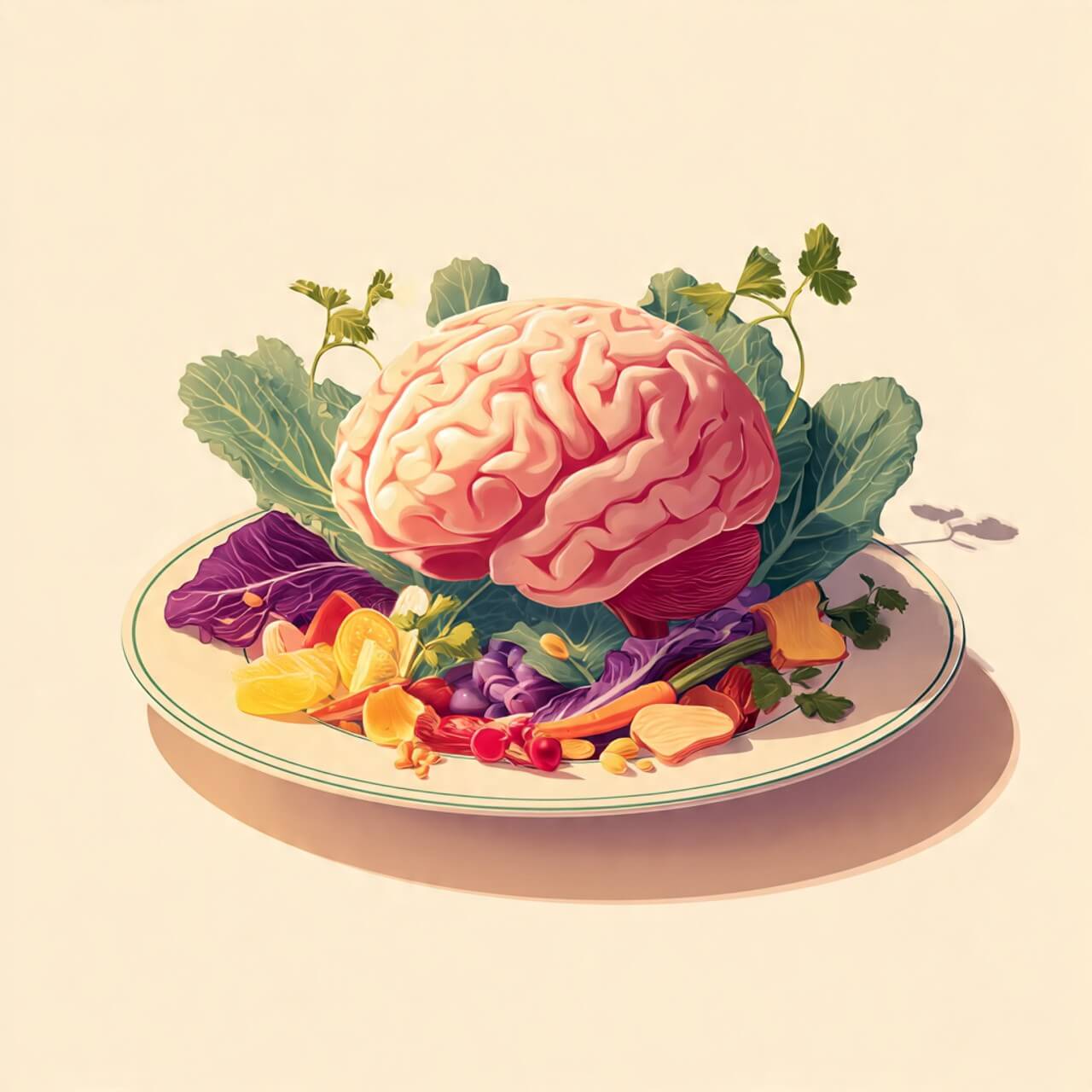
  • What You Eat Is Quietly Shaping How You Think, Feel and Focus

    What You Eat Is Quietly Shaping How You Think, Feel and Focus

    You wake up tired even though you slept enough. By mid-morning your focus has already started slipping. By early afternoon there is a heaviness that no amount of coffee seems to fully lift. You feel irritable over small things, distracted during important things, and vaguely flat in a way that doesn’t have a clear cause.

    You have tried fixing this with better sleep. With morning routines. With journaling and meditation and habit tracking and all the other tools that personal growth culture offers. And those things help — they genuinely do. But something keeps resetting. Something keeps pulling your energy and your mood and your clarity back down to a baseline that feels lower than it should.

    And it is sitting on your plate three times a day, quietly doing its work while you look everywhere else for the answer.

    The connection nobody makes explicitly enough

    Food and mental health are talked about separately almost everywhere. Nutritionists talk about food. Therapists and personal development writers talk about mindset, habits, and emotional wellbeing. The two worlds rarely meet in the same conversation — which means most people never connect what they are eating to how they are feeling, thinking, and functioning on any given day.

    But the connection is direct, biological, and significant. Your brain is a physical organ that runs on the nutrients you give it. The neurotransmitters responsible for your mood — serotonin, dopamine, norepinephrine — are manufactured from the raw materials in your food. The energy your prefrontal cortex needs to focus, make decisions, regulate emotion, and exercise self-control comes from your diet. The inflammation that underlies anxiety, low mood, and brain fog is directly influenced by what you eat and how consistently you eat it.

    You are not experiencing a motivation problem or a discipline problem or a mindset problem. You are, at least in part, experiencing a nutrition problem — and it is one of the most overlooked and most fixable contributors to the way you feel every day.

    “You have been trying to think your way to better focus and feel your way to better mood. But your brain is a body part — and body parts need to be fed.”

    What skipping meals is actually doing to your mind

    You skip breakfast because you’re not hungry, or because you’re rushing, or because intermittent fasting seemed like a good idea at the time. By 10am your blood sugar has dropped and your brain — which runs almost exclusively on glucose — is operating on reduced fuel. You notice it as difficulty concentrating, a slight shakiness, an irritability that seems disproportionate to the situation. You attribute it to stress or tiredness or the difficulty of the task. It is hunger. It is almost always at least partly hunger.

    Your brain uses approximately 20% of your body’s total energy despite being only 2% of your body weight. It is the most metabolically expensive organ you have — and it does not have the ability to store energy the way your muscles do. It depends on a consistent, steady supply of glucose from your bloodstream. When that supply drops — because you skipped a meal, or ate something that spiked and crashed your blood sugar, or simply haven’t drunk enough water — your cognitive performance drops with it. Not metaphorically. Measurably, neurologically, in ways that show up on brain scans and cognitive performance tests.

    The focus you have been trying to build with productivity techniques and morning routines and discipline — you are building it on a foundation that shifts every time your blood sugar does. Fix the foundation first.

    What processed food is doing to your mood

    The relationship between ultra-processed food and mental health is one of the most robustly supported findings in nutritional psychiatry — a field that has grown significantly in the last decade. Study after study has found that diets high in ultra-processed foods — the packaged, refined, additive-laden products that make up a significant portion of most modern diets — are associated with higher rates of depression, anxiety, and cognitive impairment.

    The mechanisms are multiple. Ultra-processed foods promote inflammation throughout the body, including in the brain — and chronic low-grade inflammation is now understood to be a significant driver of depression and anxiety. They disrupt the gut microbiome, which produces a substantial portion of the body’s serotonin and communicates directly with the brain through the gut-brain axis. They spike and crash blood sugar in ways that produce mood instability. And they are typically low in the micronutrients — magnesium, zinc, B vitamins, omega-3 fatty acids — that the brain needs to manufacture the neurotransmitters that regulate how you feel.

    You are not imagining the afternoon crash. You are not imagining the brain fog that follows a few days of eating poorly. Your brain is telling you, as clearly as it knows how, that what you gave it was not adequate fuel — and it is performing accordingly.

    “You would not put the wrong fuel in a car and then blame the car for not running well. But you do it to your brain every day — and then wonder why your thinking feels slow and your mood feels unstable.”

    What actually helps — and it is simpler than you think

    This is not about a perfect diet. It is not about eliminating entire food groups or following a complicated nutritional protocol or counting anything. The research on food and mental health consistently points to the same simple direction — more whole foods, less ultra-processed ones, eaten consistently rather than erratically. That is the entire framework. Everything else is refinement.

    Eat breakfast — something real, not a coffee and a biscuit. Your brain has been fasting for seven or eight hours and it needs fuel to function. Even something small — eggs, oats, fruit with protein, a handful of nuts — is enough to stabilize your blood sugar and give your morning focus a foundation to build on. The difference between a breakfast and no breakfast in terms of morning cognitive performance is measurable and significant. You will notice it within a week of consistency.

    Eat regularly enough that your blood sugar doesn’t crash between meals. This does not mean eating constantly — it means not going five or six hours without food and then wondering why your mood has deteriorated and your patience has evaporated. A small snack between meals — fruit, nuts, yogurt — is enough to keep the fuel supply stable and the mood stable with it.

    Eat more vegetables than you currently do — not because of weight or health in the abstract sense, but because vegetables are the primary source of the micronutrients your brain uses to manufacture mood-regulating neurotransmitters. Leafy greens, in particular, are rich in folate, which is directly involved in serotonin production. You do not need to overhaul your diet. Adding one extra serving of vegetables to one meal per day is a meaningful change that compounds over time.

    Drink water consistently through the day. Dehydration — even mild dehydration, the kind most people experience without realizing it — directly impairs concentration, memory, and mood. Your brain is approximately 75% water and is exquisitely sensitive to fluid levels. The afternoon cognitive slump that you attribute to a post-lunch energy dip is very often, at least in part, dehydration. A glass of water before each meal and one on your desk throughout the day is enough to make a noticeable difference.

    Eat fewer ultra-processed foods — not none, just fewer. The goal is not purity. The goal is reducing the proportion of your diet that is actively working against your brain while increasing the proportion that is actively supporting it. Every meal is not a moral choice. It is simply an opportunity to give your brain better or worse material to work with. Over hundreds of meals, the cumulative effect of slightly better choices is significant.

    You do not need a perfect diet to feel meaningfully better. You need a consistent one — regular meals, adequate water, more whole foods than processed ones. Start with one change. Eat breakfast tomorrow. That is enough for today.

    The thing that connects all of this to everything else

    Every habit on this blog — the morning routines, the journaling, the mindfulness, the focus techniques, the self-discipline strategies — works better when your brain is properly fueled. The focus you are trying to build is easier to build when your blood sugar is stable. The emotional regulation you are working on is more accessible when your gut microbiome is healthy. The motivation you are trying to sustain is more reliable when your neurotransmitter production has the raw materials it needs.

    Food is not separate from personal growth. It is the physical foundation on which all personal growth either stands or struggles. You can build excellent habits on a poor nutritional foundation — but you are building on sand, and you will feel it. The tiredness, the mood instability, the focus that won’t come, the irritability that doesn’t match the situation — these are not character flaws or discipline failures. They are often simply your brain asking, in the only language it has, for better fuel.

    Give it better fuel. Not perfectly, not all at once, not with guilt or rigidity or a complicated plan. Just slightly better, slightly more consistently, one meal at a time. And notice — genuinely notice — how differently you think and feel when you do.

    You have been working on your mindset, your habits, your routines. Now work on your fuel. Start tomorrow morning with a real breakfast and a glass of water before your phone. That is the smallest possible version of this change — and it is enough to begin. Explore more on Quiet Growth for simple daily habits that support a calmer, more focused life.