
Blog

  • The Connection Between Physical Clutter and Mental Clutter — And What I Did About It

    The Connection Between Physical Clutter and Mental Clutter — And What I Did About It

    I used to think I worked fine in chaos. That the pile of papers on my desk, the clothes draped over the chair, the half-empty cups and unopened letters and general accumulation of stuff that covered every surface of my room — none of it bothered me. I was someone who could work anywhere, in any conditions. The mess was just background. It didn’t affect me.

    I believed this completely. Right up until the day I cleared everything.

    It started as a practical decision — I needed to find something I’d lost and the only way to find it was to go through everything. So I spent a Saturday afternoon clearing every surface, filing every paper, putting every object back where it belonged or letting it go entirely. It took three hours. And when I sat down at my desk afterwards — clean, clear, empty except for what I actually needed — something happened that I hadn’t anticipated at all.

    I could think.

    Not differently, not better in some abstract sense — just more easily, more freely, with less of the low-level friction that I’d become so accustomed to that I’d stopped noticing it was there. The thought that had been sitting just out of reach arrived. The task I’d been circling for days became approachable. The background noise that I’d told myself didn’t bother me turned out to have been bothering me constantly — I just hadn’t known what the noise was until it stopped.

    What I understood that afternoon

    Your brain processes your visual environment continuously and automatically — not just when you’re looking at something deliberately, but as a constant background activity running beneath everything else you do. Every object in your field of vision is registered, assessed for relevance, and either attended to or suppressed. In a cluttered environment, that suppression work is substantial. Your brain is constantly managing a visual field full of objects that each represent something — an unfinished task, a decision not yet made, a thing that needs to be dealt with at some point — and that management consumes cognitive resources that could otherwise go toward thinking, focusing, and doing the actual work in front of you.

    This is not a metaphor. It is a measurable neurological process. Research from the Princeton Neuroscience Institute found that physical clutter competes for your attention in ways that reduce performance and increase stress — even when you’re not consciously aware of it. The visual cortex becomes overwhelmed by competing stimuli. The result is a kind of low-grade cognitive load that sits beneath your awareness and drains your capacity for sustained focus, creative thinking, and emotional regulation throughout the day.

    The mess I had told myself didn’t bother me was, neurologically speaking, bothering me constantly. It just didn’t bother me loudly enough for me to name it as the source of the friction I felt every time I tried to concentrate.

    “A cluttered space is not just uncomfortable to look at. It is actively competing with whatever you are trying to think about — and it wins more often than you realize”

    The things I noticed once the clutter was gone

    The most immediate change was in how quickly I could start working. Before the clear-out, sitting down at my desk involved a kind of mental negotiation — moving things out of the way, deciding what to deal with first, feeling vaguely guilty about the pile of things I wasn’t dealing with yet. After, I sat down and began. That transition — from arriving at the desk to actually working — went from several minutes of low-level friction to almost nothing. The space was ready. Which meant I was ready.

    The second change was in how long I could sustain focus once I’d started. Without the visual noise of clutter pulling at the edges of my attention, I found it significantly easier to stay with a single task for longer. The wandering that had felt like a natural limitation of my concentration turned out to be, at least in part, a response to a visually distracting environment. Give the brain fewer things to process in the background and it has more left over for whatever you’re asking it to do in the foreground.

    The third change surprised me most. My mood was better. Not dramatically — not in a way I could have predicted or that anyone else would necessarily notice. But there was a quietness to the end of my days that hadn’t been there before. A sense of things being in order that extended beyond the physical. The space felt calm, and I felt calmer in it — as though the order on my desk was somehow being mirrored in something less tangible but equally real.

    I had spent years trying to manage my mental state through journaling, meditation, and self-reflection. Those things work — I still do all of them. But I had completely overlooked the most immediate and physical environment my mind lives in. My room. My desk. The space I inhabit every day and barely see because I’ve stopped noticing it.

    I had been trying to create mental clarity while living inside physical chaos. It was like trying to hear a quiet voice in a loud room — possible, with enormous effort, but never easy.”

    Why clutter accumulates in the first place

    Clutter is almost never random. It accumulates in specific patterns that reveal something about how you are managing — or not managing — the decisions and tasks of your daily life. Every item on a cluttered surface represents a decision that hasn’t been made. Do I keep this? Where does it belong? What do I do with it? Put enough unmade decisions in one place and you have clutter — which is, at its core, deferred decision-making made physical.

    This is why decluttering feels mentally exhausting in a way that simple tidying doesn’t. Tidying moves things around. Decluttering requires you to make decisions — often about things you’ve been deliberately not deciding about for weeks or months. Each item you pick up and assess is a small act of mental resolution. Done in volume, it is genuinely tiring. But the tiredness afterwards is the satisfying kind — the kind that comes from having actually dealt with something rather than continuing to carry it.

    The clutter on your surfaces is also, very often, a physical map of your mental clutter. The things you haven’t dealt with in your space tend to correspond to the things you haven’t dealt with in your mind. The unopened letter you’ve been avoiding. The project you’ve been putting off. The decision you’re not ready to make. They sit on your desk in physical form, quietly adding to the background weight of everything unresolved — which is why dealing with them physically often produces a mental relief that goes beyond what the task would seem to warrant.

    What I actually do now — and what made it sustainable

    I don’t maintain a perfect space. That was never the goal and it never will be — because perfect is a standard that collapses the moment life happens, and a decluttering practice built on perfection is one bad week away from being abandoned entirely.

    What I do instead is small and consistent. Every evening before I finish for the day I spend five minutes clearing my immediate workspace — returning things to where they belong, throwing away what doesn’t need to be kept, leaving the surface ready for tomorrow. Five minutes. Not a deep clean, not a reorganization, just a daily reset that prevents the accumulation from ever getting to the point where it requires a Saturday afternoon to address.

    Once a week, usually on Sunday, I do a slightly longer version — ten to fifteen minutes walking through the spaces I spend the most time in and dealing with anything that has accumulated during the week. This is enough to keep things at a level where the visual environment is working with me rather than against me.

    And when I notice my mental state deteriorating — when focus becomes elusive and everything feels harder than it should — one of the first things I now check is my physical environment. Because more often than I expected, the answer to why my thinking feels cluttered is sitting on my desk in plain sight.

    You do not need to declutter everything at once. Start with one surface — your desk, your bedside table, your kitchen counter. Clear it completely. Then sit in the space and notice how it feels. That feeling is your brain with one less thing to manage. Give it that more often.

    Where to start if this resonates

    Pick one surface. Not your whole room, not your whole house — one surface that you use every day and that is currently covered in things that don’t need to be there. Clear it completely. Everything either has a home it goes back to, gets dealt with, or gets let go. Then leave it clear for one week and notice what changes.

    It will not stay perfectly clear — that is not the goal. The goal is to experience, even briefly, what it feels like to work and live in a space that is not constantly competing with your thoughts. Once you’ve felt that, the motivation to maintain it tends to take care of itself. Because the difference is not subtle. Once you notice it, you cannot un-notice it.

    Your external environment is not separate from your internal one. They talk to each other constantly, in ways that are biological and measurable and real. What you surround yourself with physically shapes what you are capable of mentally — every single day, whether you are aware of it or not.

    Clear the surface. Clear the mind. Start with one.

    Tonight, before you sleep, clear one surface in the space where you spend the most time. Just one. Five minutes. Then sit in it and notice. That noticing is the beginning of understanding how much your environment has been shaping your mind — and how much better it can feel when it stops working against you. Explore more on Quiet Growth for simple daily habits that support a calmer, more focused life.

  • What You Eat Is Quietly Shaping How You Think, Feel and Focus

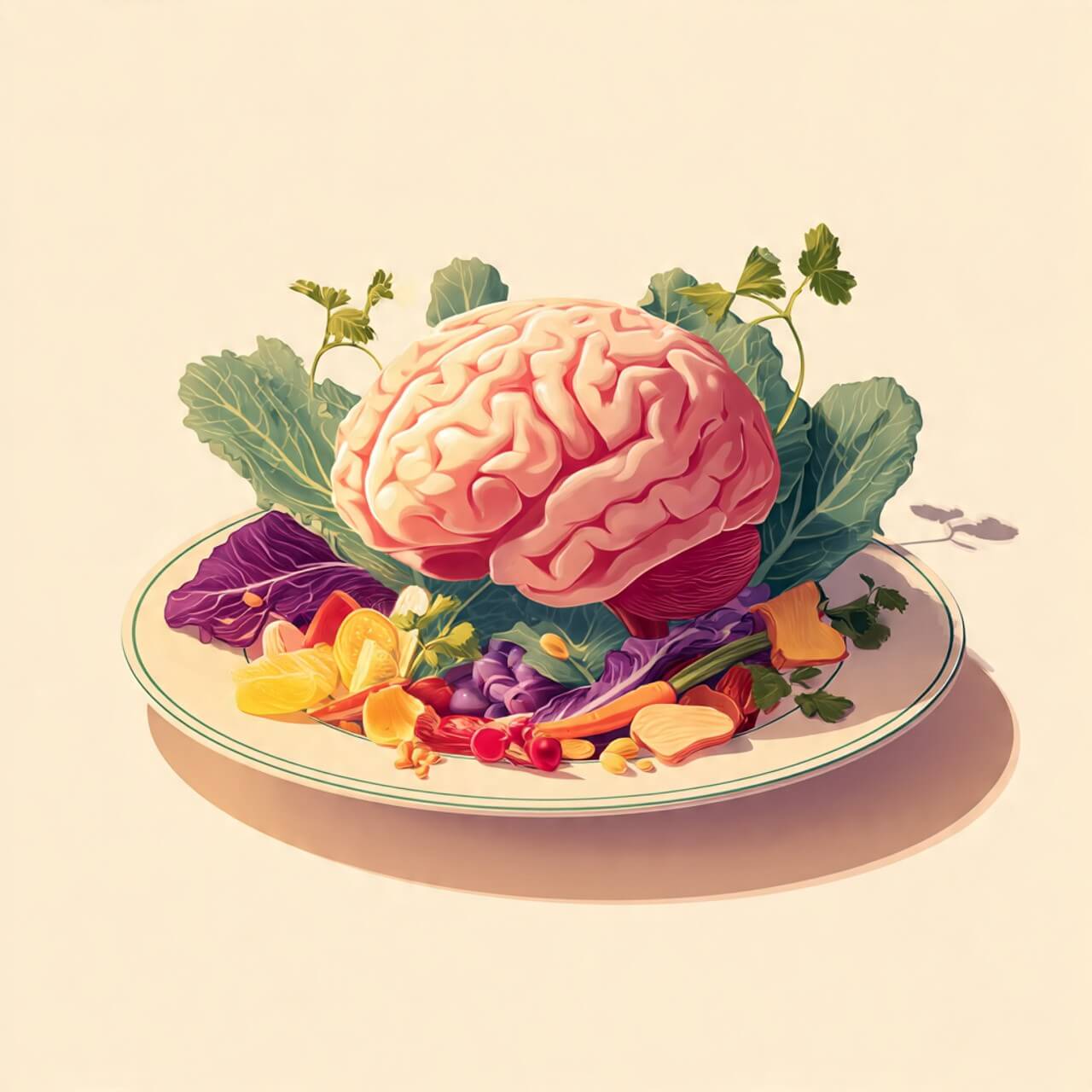
    What You Eat Is Quietly Shaping How You Think, Feel and Focus

    You wake up tired even though you slept enough. By mid-morning your focus has already started slipping. By early afternoon there is a heaviness that no amount of coffee seems to fully lift. You feel irritable over small things, distracted during important things, and vaguely flat in a way that doesn’t have a clear cause.

    You have tried fixing this with better sleep. With morning routines. With journaling and meditation and habit tracking and all the other tools that personal growth culture offers. And those things help — they genuinely do. But something keeps resetting. Something keeps pulling your energy and your mood and your clarity back down to a baseline that feels lower than it should.

    And it is sitting on your plate three times a day, quietly doing its work while you look everywhere else for the answer.

    The connection nobody makes explicitly enough

    Food and mental health are talked about separately almost everywhere. Nutritionists talk about food. Therapists and personal development writers talk about mindset, habits, and emotional wellbeing. The two worlds rarely meet in the same conversation — which means most people never connect what they are eating to how they are feeling, thinking, and functioning on any given day.

    But the connection is direct, biological, and significant. Your brain is a physical organ that runs on the nutrients you give it. The neurotransmitters responsible for your mood — serotonin, dopamine, norepinephrine — are manufactured from the raw materials in your food. The energy your prefrontal cortex needs to focus, make decisions, regulate emotion, and exercise self-control comes from your diet. The inflammation that underlies anxiety, low mood, and brain fog is directly influenced by what you eat and how consistently you eat it.

    You are not experiencing a motivation problem or a discipline problem or a mindset problem. You are, at least in part, experiencing a nutrition problem — and it is one of the most overlooked and most fixable contributors to the way you feel every day.

    “You have been trying to think your way to better focus and feel your way to better mood. But your brain is a body part — and body parts need to be fed.”

    What skipping meals is actually doing to your mind

    You skip breakfast because you’re not hungry, or because you’re rushing, or because intermittent fasting seemed like a good idea at the time. By 10am your blood sugar has dropped and your brain — which runs almost exclusively on glucose — is operating on reduced fuel. You notice it as difficulty concentrating, a slight shakiness, an irritability that seems disproportionate to the situation. You attribute it to stress or tiredness or the difficulty of the task. It is hunger. It is almost always at least partly hunger.

    Your brain uses approximately 20% of your body’s total energy despite being only 2% of your body weight. It is the most metabolically expensive organ you have — and it does not have the ability to store energy the way your muscles do. It depends on a consistent, steady supply of glucose from your bloodstream. When that supply drops — because you skipped a meal, or ate something that spiked and crashed your blood sugar, or simply haven’t drunk enough water — your cognitive performance drops with it. Not metaphorically. Measurably, neurologically, in ways that show up on brain scans and cognitive performance tests.

    The focus you have been trying to build with productivity techniques and morning routines and discipline — you are building it on a foundation that shifts every time your blood sugar does. Fix the foundation first.

    What processed food is doing to your mood

    The relationship between ultra-processed food and mental health is one of the most robustly supported findings in nutritional psychiatry — a field that has grown significantly in the last decade. Study after study has found that diets high in ultra-processed foods — the packaged, refined, additive-laden products that make up a significant portion of most modern diets — are associated with higher rates of depression, anxiety, and cognitive impairment.

    The mechanisms are multiple. Ultra-processed foods promote inflammation throughout the body, including in the brain — and chronic low-grade inflammation is now understood to be a significant driver of depression and anxiety. They disrupt the gut microbiome, which produces a substantial portion of the body’s serotonin and communicates directly with the brain through the gut-brain axis. They spike and crash blood sugar in ways that produce mood instability. And they are typically low in the micronutrients — magnesium, zinc, B vitamins, omega-3 fatty acids — that the brain needs to manufacture the neurotransmitters that regulate how you feel.

    You are not imagining the afternoon crash. You are not imagining the brain fog that follows a few days of eating poorly. Your brain is telling you, as clearly as it knows how, that what you gave it was not adequate fuel — and it is performing accordingly.

    “You would not put the wrong fuel in a car and then blame the car for not running well. But you do it to your brain every day — and then wonder why your thinking feels slow and your mood feels unstable.”

    What actually helps — and it is simpler than you think

    This is not about a perfect diet. It is not about eliminating entire food groups or following a complicated nutritional protocol or counting anything. The research on food and mental health consistently points to the same simple direction — more whole foods, less ultra-processed ones, eaten consistently rather than erratically. That is the entire framework. Everything else is refinement.

    Eat breakfast — something real, not a coffee and a biscuit. Your brain has been fasting for seven or eight hours and it needs fuel to function. Even something small — eggs, oats, fruit with protein, a handful of nuts — is enough to stabilize your blood sugar and give your morning focus a foundation to build on. The difference between a breakfast and no breakfast in terms of morning cognitive performance is measurable and significant. You will notice it within a week of consistency.

    Eat regularly enough that your blood sugar doesn’t crash between meals. This does not mean eating constantly — it means not going five or six hours without food and then wondering why your mood has deteriorated and your patience has evaporated. A small snack between meals — fruit, nuts, yogurt — is enough to keep the fuel supply stable and the mood stable with it.

    Eat more vegetables than you currently do — not because of weight or health in the abstract sense, but because vegetables are the primary source of the micronutrients your brain uses to manufacture mood-regulating neurotransmitters. Leafy greens, in particular, are rich in folate, which is directly involved in serotonin production. You do not need to overhaul your diet. Adding one extra serving of vegetables to one meal per day is a meaningful change that compounds over time.

    Drink water consistently through the day. Dehydration — even mild dehydration, the kind most people experience without realizing it — directly impairs concentration, memory, and mood. Your brain is approximately 75% water and is exquisitely sensitive to fluid levels. The afternoon cognitive slump that you attribute to a post-lunch energy dip is very often, at least in part, dehydration. A glass of water before each meal and one on your desk throughout the day is enough to make a noticeable difference.

    Eat fewer ultra-processed foods — not none, just fewer. The goal is not purity. The goal is reducing the proportion of your diet that is actively working against your brain while increasing the proportion that is actively supporting it. Every meal is not a moral choice. It is simply an opportunity to give your brain better or worse material to work with. Over hundreds of meals, the cumulative effect of slightly better choices is significant.

    You do not need a perfect diet to feel meaningfully better. You need a consistent one — regular meals, adequate water, more whole foods than processed ones. Start with one change. Eat breakfast tomorrow. That is enough for today.

    The thing that connects all of this to everything else

    Every habit on this blog — the morning routines, the journaling, the mindfulness, the focus techniques, the self-discipline strategies — works better when your brain is properly fueled. The focus you are trying to build is easier to build when your blood sugar is stable. The emotional regulation you are working on is more accessible when your gut microbiome is healthy. The motivation you are trying to sustain is more reliable when your neurotransmitter production has the raw materials it needs.

    Food is not separate from personal growth. It is the physical foundation on which all personal growth either stands or struggles. You can build excellent habits on a poor nutritional foundation — but you are building on sand, and you will feel it. The tiredness, the mood instability, the focus that won’t come, the irritability that doesn’t match the situation — these are not character flaws or discipline failures. They are often simply your brain asking, in the only language it has, for better fuel.

    Give it better fuel. Not perfectly, not all at once, not with guilt or rigidity or a complicated plan. Just slightly better, slightly more consistently, one meal at a time. And notice — genuinely notice — how differently you think and feel when you do.

    You have been working on your mindset, your habits, your routines. Now work on your fuel. Start tomorrow morning with a real breakfast and a glass of water before your phone. That is the smallest possible version of this change — and it is enough to begin. Explore more on Quiet Growth for simple daily habits that support a calmer, more focused life.

  • You Are Not Resting. You Are Passively Consuming — And There Is a Difference.

    You Are Not Resting. You Are Passively Consuming — And There Is a Difference.

    The day ends. You are tired — genuinely tired, the kind that settles into your shoulders and behind your eyes and makes the idea of doing anything that requires thinking feel impossible. So you do what you always do. You pick up your phone. You open an app. You start scrolling.

    An hour passes. Maybe two. You have watched videos, read posts, consumed opinions, absorbed information, followed rabbit holes you didn’t intend to follow and arrived somewhere you didn’t mean to go. And when you finally put the phone down, you don’t feel rested. You feel vaguely overfull — like you’ve eaten too much of something that wasn’t quite food. Stimulated but not satisfied. Distracted but not recharged.

    You tell yourself it was rest. But somewhere underneath that, you know it wasn’t.

    What passive consumption actually is

    Passive consumption is the state of taking in content without intention, without engagement, and without anything being produced on the other end. It is the default mode of modern life — the thing your brain reaches for automatically whenever there is a gap, a quiet moment, a pause between one thing and the next. It is scrolling social media without really seeing it. Watching videos without really watching them. Reading articles that leave no trace in your memory an hour later. Listening to podcasts while doing something else entirely, absorbing nothing, retaining nothing, simply filling the silence because silence has become uncomfortable.

    It covers everything. The three hours lost to Instagram on a Sunday afternoon. The self-help podcast played in the background while you cook, half-heard and immediately forgotten. The YouTube auto play that carries you from something you chose to something you never would have chosen, through seven videos you don’t remember, into a version of the evening you didn’t plan. The news app opened out of habit seventeen times in a day, each time delivering a fresh dose of anxiety about things entirely outside your control.

    All of it feels like something. It feels like rest, or learning, or staying informed, or winding down. What it actually is, almost always, is none of those things.

    “Passive consumption is not rest. It is stimulation without nourishment — the mental equivalent of eating cereal at midnight when what your body actually needs is sleep.”

    What it is doing to you

    The most immediate effect of passive consumption is the one you probably already recognize — the hollow feeling at the end of a session. The slight unreality of having spent significant time somewhere that left no impression. The guilt that edges in when you put the phone down and do the mental calculation of what else you could have done with that time. That feeling is your nervous system trying to tell you something important, and most of the time you manage it by picking the phone back up.

    But the deeper effects are quieter and more significant. Passive consumption gradually narrows your attention span — not in a dramatic way, but in the way that makes sitting with a book for an hour feel harder than it used to, makes a conversation without a distraction feel slightly restless, makes sustained focus on anything that isn’t delivering instant novelty feel like effort in a way it didn’t before. You are not becoming less intelligent. You are becoming less patient with depth — and depth is where everything meaningful lives.

    It also distorts your sense of time in a way that is difficult to articulate but easy to feel. Hours disappear. Evenings vanish. Weekends that were supposed to feel expansive collapse into a series of sessions with a screen and a vague awareness that something was supposed to happen that didn’t. The days blur at the edges. The weeks start to feel identical. And underneath it all is a growing suspicion that your life is somehow passing faster than you are living it — which is exactly what is happening.

    For people who consume a lot of self-improvement content specifically — and if you are reading this, that probably includes you — passive consumption creates an additional and particularly insidious problem. It produces the feeling of growth without the substance of it. Every podcast about habits, every article about mindset, every video about productivity delivers a small hit of inspiration, a sense of forward movement, a feeling that things are about to change. And then they don’t. Because feeling inspired is not the same as being changed. And consuming content about becoming better is not the same as becoming better. The gap between those two things is where most people live — permanently on the edge of a transformation that never quite arrives.

    “You have watched hundreds of hours of content about living better. You have lived almost none of it.”

    Why you keep doing it anyway

    Because it works — in the short term, for the wrong things. Passive consumption is extraordinarily effective at delivering two things your brain wants constantly: novelty and stimulation. Every scroll brings something new. Every video offers a different perspective, a different face, a different story. The variety is essentially infinite and the barrier to accessing it is essentially zero. Your brain, which evolved to find novelty rewarding because novelty once meant new food sources or new threats, finds this environment almost impossible to resist.

    It also works as an emotional regulation tool — and this is the part that makes it hardest to put down. When you are anxious, scrolling quiets the anxiety temporarily by giving your mind something else to track. When you are sad, entertainment provides enough distraction to take the edge off. When you are bored, the phone eliminates the discomfort of boredom immediately and completely. It is the most efficient emotional management tool ever created — and it is available in your pocket at all times, requiring no effort, no skill, and no awareness of what you are actually doing.

    The problem is that it manages emotions without processing them. The anxiety that scrolling temporarily quieted comes back — usually louder. The sadness that entertainment distracted you from is still there when the video ends. The boredom that the phone eliminated returns the moment you put it down, often accompanied by an additional layer of guilt about how you just spent the last hour. Passive consumption treats the symptom without touching the cause — and the cause, unaddressed, gradually grows.

    The difference between passive consumption and genuine rest

    Genuine rest is restorative. It leaves you feeling more like yourself than you did before — calmer, quieter, more present. It replenishes something that was depleted rather than simply distracting you from the depletion. It looks different for different people — a walk without a podcast, a meal eaten without a screen, a conversation that goes somewhere real, a book that requires your full attention and rewards it, time spent doing something with your hands, silence that you sit with rather than immediately fill.

    What genuine rest has in common across all its forms is presence — actual engagement with what is happening rather than checked-out consumption of what is being delivered to you. The distinction is not about the activity itself but about your relationship to it. Watching a film you chose deliberately, giving it your full attention, letting it move you — that is rest. Having Netflix play automatically for three hours while you half-watch and half-scroll — that is passive consumption wearing rest’s clothes.

    Reading a book that challenges you and changes something in how you see things — that is active engagement. Listening to a podcast about personal development while doing six other things, retaining nothing, feeling vaguely productive — that is passive consumption wearing learning’s clothes. The clothes are convincing. But your nervous system knows the difference. And it will tell you, every time, in the hollow feeling that follows.

    Ask yourself honestly after any period of screen time — do I feel more rested or less? More like myself or less? More present or less? The answer is your body telling you the difference between consumption and rest. It knows. You just have to be willing to listen.

    What to do instead — and how to start

    You are not going to eliminate passive consumption from your life — and that is not the goal. The goal is to make it a deliberate choice rather than an automatic default. To notice when you are reaching for your phone out of habit rather than genuine desire. To create enough space between the impulse and the action that you can actually decide whether this is what you want to do with this particular moment.

    Start by making the passive consumption slightly less effortless. Move the most used apps off your home screen. Put your phone in another room during meals and the first and last hour of the day. Set screen time limits that create a small moment of friction before you go over them — not to stop you, but to make the choice conscious rather than automatic. Friction is not punishment. It is the space in which awareness lives.

    Then start replacing — not eliminating, replacing. One scrolling session per day swapped for something that actually leaves you feeling better. A walk. A real conversation. Ten minutes of writing. Cooking something from scratch. Sitting outside without your phone. Reading something you chose rather than something the algorithm chose for you. Not every day, not all at once — just one replacement, tried once, to remind yourself what genuine rest actually feels like. Because most people, having spent months or years in passive consumption, have genuinely forgotten. And the reminder, when it comes, is usually enough to want more of it.

    The goal is not a life without screens or content or the pleasure of a well-made video on a Sunday afternoon. The goal is a life where you are the one choosing — where consumption is something you do intentionally rather than something that happens to you by default. That distinction — between choosing and defaulting — is where your time, your attention, and ultimately your life actually lives.

    Tonight, before you pick up your phone, pause for three seconds and ask: is this what I actually want right now — or is this just what I always do? Three seconds is enough to make the choice conscious. And a conscious choice, whatever it is, is infinitely better than an automatic one.

    One last thing

    There is something quietly ironic about reading an article about passive consumption — because reading articles is, for many people, a form of it. You might finish this post, feel a genuine flicker of recognition and resolve, and then immediately open another tab.

    I am not saying don’t do that. I am saying notice if you do. Notice the impulse, notice what it feels like, notice what you are reaching for and why. That noticing — small, unglamorous, requiring no app or system or habit tracker — is the beginning of everything. Not the reading about it. The noticing. Right now, in this moment, before you do anything else.

    You already know the difference between consuming and living. Your body has been telling you for a long time. The only question is whether today is the day you decide to listen. Explore more on Quiet Growth for simple daily habits that support a calmer, more focused life.

  • For the Person Who Reads Every Self-Help Book and Still Feels Stuck

    For the Person Who Reads Every Self-Help Book and Still Feels Stuck

    You have read the books. All of them — or close enough. You’ve highlighted passages, dog-eared pages, taken notes in the margins. You’ve listened to the podcasts on your commute and watched the YouTube videos at midnight and followed the accounts that post daily reminders about growth and discipline and becoming your best self.

    You know what a habit loop is. You understand the concept of compound interest applied to personal development. You could explain the difference between a fixed and a growth mindset to someone who’s never heard of either. You have more knowledge about how to change than most people accumulate in a lifetime.

    And you are still stuck.

    Not dramatically. Not in a way that’s obvious from the outside. You function fine. You show up. You do what needs to be done. But underneath that functioning is a persistent, quiet feeling that you are not actually moving — that all the reading and learning and consuming has somehow not translated into the version of your life you were certain, by now, it would have.

    If this is you — this post is specifically for you.

    The trap nobody warned you about

    There is a particular kind of stuck that only affects people who care deeply about growth. People who are lazy or indifferent don’t end up here — they don’t read self-help books in the first place. The people who end up consuming endless personal development content and still feeling stuck are, almost without exception, people who genuinely want to grow, who are putting in real effort, and who are doing something that feels like work but isn’t producing the results they expected.

    That something is called passive consumption — and it is the most comfortable trap in the entire self-improvement industry.

    Reading about change feels like changing. Learning about habits feels like building them. Understanding why you do the things you do feels like doing something about them. The dopamine hit of a good book or a compelling podcast is real — it produces a genuine feeling of progress, of momentum, of being on the right path. But it is the feeling of progress, not progress itself. And the gap between the two is where you have been living.

    “You have been preparing to change for so long that the preparation has become the thing itself. The reading is not the runway. It has become the destination.”

    Why more information is not the answer

    You do not need another book. This is the hardest thing to hear — and the most important. You already have more than enough information to take the next step. The next book will not give you what the last twenty couldn’t — because the problem was never a lack of information. It was something else entirely.

    Every book you finish, every podcast episode you complete, every highlighted passage you screenshot and save — each one produces a small neurological reward. Your brain registers it as an achievement. Which means the more you consume, the more your brain is being trained to associate consumption with the feeling of growth — even when no actual growth is happening. Over time this creates a cycle where consuming feels so much like progressing that the absence of real progress becomes harder and harder to notice.

    And here is the counterintuitive truth that almost nobody talks about — the more you know about how to change, the more aware you become of how far you are from doing it. You know exactly what a good morning routine looks like, which makes your current morning feel like a more specific and deliberate failure. You know precisely how habits are built, which makes every broken habit feel like a more informed disappointment. Knowledge without action doesn’t just fail to help. It can actively make the stuck feel worse.

    But perhaps the most honest reason you keep reaching for another book is this: reading is safe. Taking action is not. A book cannot judge you, reject you, or confirm your worst fear — that you are someone who knows better and still can’t do better. Action can. And so without fully realizing it, you have been choosing the safety of consumption over the vulnerability of action. Every time you finish a book and immediately start another one, some part of you is choosing the familiar comfort of learning over the uncomfortable risk of trying.

    That is not a character flaw. It is a very human response to fear dressed up as diligence.

    The next book is not going to be the one that finally unlocks everything. The unlock you are waiting for is not in any book — it is in the first imperfect, uncomfortable, small action you take after closing this one.

    What actually gets you unstuck

    Pick one thing — just one — from everything you have read. Not the most important thing, not the thing you feel most ready for, just one small thing you have read about and not yet done. And do it today. Badly, imperfectly, without the right conditions or the right mood or the right moment. Do it anyway. Because the gap between knowing and doing is not closed by more knowing. It is closed by doing — and the doing has to start somewhere, in conditions that are never quite ideal, with a version of you that is not yet the person you are trying to become.

    Set a consumption limit and protect it. One book at a time — and no new book until you have spent at least two weeks applying something from the last one. This is not about deprivation. It is about rebalancing the ratio between input and output in your life — because right now that ratio is wildly skewed toward input, and it is keeping you stuck. Information has a diminishing return. The first book on habits changes everything. The fifteenth adds almost nothing — especially if none of the previous fourteen produced any actual change in your behavior.

    Ask a different question. Instead of “what should I read next,” ask “what is the one thing I already know that I am not doing?” The answer will come immediately — because you know. You have always known. The reading has given you extraordinary clarity about what needs to change. What has been missing is not more clarity. It is the decision to act on the clarity you already have.

    And understand this — feeling ready is not a prerequisite for beginning. You have been waiting, consciously or not, to feel ready. To feel confident enough, informed enough, prepared enough to actually begin. But readiness is not a feeling that arrives before action. It is a feeling that develops through action. The person you want to become does not exist yet — they are built through the doing, not the preparing. Every day you wait to feel ready is a day you are choosing the idea of growth over actual growth.

    “The idea, however compelling, however well-read, however thoroughly understood — the idea will never become your life. Only the doing will.”

    What all that reading gave you

    All of that reading was not wasted. It built something real — a genuine understanding of yourself, of human behavior, of what change requires and what it looks like. That foundation is valuable. It means that when you do start taking action, you will do it with more self-awareness and more compassion than someone who never read a single page. The reading was not the problem. The reading without action was. And that is entirely fixable — starting with one small thing, today, that you already know how to do.

    The only thing left to do

    You came to this post looking for something — maybe permission, maybe recognition, maybe one more piece of understanding that would finally make everything click. And perhaps you found some of that here.

    But here is what I want to leave you with, as directly as I can say it: you do not need this post either. You do not need what comes after it. You do not need the next insight or the next framework or the next beautifully written explanation of why you are the way you are.

    You need to close this tab and do one thing. The smallest possible thing. The thing you already know needs doing and have been reading around instead of doing. Not because the reading was wrong — but because the reading is complete. You have what you need. You have always had what you need.

    The only thing left is to begin.

    You are not stuck because you don’t know enough. You are stuck because knowing has felt like enough. It isn’t — but one small action today will be. Close this. Go do the thing. Explore more on Quiet Growth for simple daily habits that support a calmer, more focused life.
  • The Anti-Hustle Guide to a Better Life

    The Anti-Hustle Guide to a Better Life

    There was a version of me that wore exhaustion like a badge of honour.

    I was the person who stayed up until 2am working. Who skipped weekends because successful people don’t take days off. Who answered emails at midnight and felt quietly proud of it. Who consumed every podcast, every book, every YouTube video about productivity and success and used them to convince myself that if I just worked harder, longer, and with more discipline, everything I wanted would eventually arrive.

    I believed in hustle culture completely. Not because someone forced it on me — because it felt true. Because the people selling it were compelling and the logic seemed sound. Work more, get more. Sacrifice now, reward later. Rest is for people who don’t want it badly enough.

    And then I burned out so completely that I couldn’t work at all.

    Not dramatically. Not in a way that looked like anything from the outside. I just gradually became unable to do the things I’d been doing — the focus wouldn’t come, the motivation had evaporated, and the thought of opening my laptop produced a physical resistance I’d never experienced before. I’d pushed so hard for so long that my body and mind had quietly decided they were done.

    That was the beginning of understanding what hustle culture had actually cost me — and what actually works instead.

    The lies hustle culture told me

    THE LIE 01

    More hours equals more results

    This is the foundational lie of hustle culture — and it sounds so reasonable that most people never question it. Of course more work produces more results. That’s just math. Except it isn’t. Cognitive performance degrades significantly after four to six hours of focused work. The seventh and eighth hours produce a fraction of the output of the first two — and they cost far more in recovery time than they contribute in productivity. Working twelve hours a day doesn’t produce three times the results of four. It often produces less, at lower quality, while accumulating a debt of exhaustion that compounds daily until it becomes impossible to repay.

    THE LIE 02

    Rest is laziness

    Hustle culture treats rest as the enemy of success — a weakness to be overcome, a concession to be minimized, something earned only after sufficient suffering. This is not just wrong. It is the opposite of true. Rest is when your brain consolidates learning, processes emotion, repairs the physical damage of stress, and prepares for the next period of output. Removing rest from the equation doesn’t make you more productive. It makes you progressively less capable — until eventually you’re putting in long hours and producing almost nothing of value while running on a reserve you stopped replenishing months ago.

    THE LIE 03

    Busyness means progress

    I was extraordinarily busy during my hustle years. Calendar full, inbox overflowing, always on, always responding, always doing something. And looking back, much of what I was doing was movement without direction — the feeling of productivity without the substance of it. Hustle culture rewards busyness because busyness is visible and measurable. But the most important work — thinking clearly, making good decisions, building something with real depth — requires space, not speed. The people who produce the most meaningful work over the longest time are rarely the busiest people in the room.

    THE LIE 04

    If you’re not suffering you’re not working hard enough

    There is a version of hustle culture that has romanticized suffering to a genuinely disturbing degree. The 4am wake-ups. The cold showers. The skipped meals. The pride in discomfort as proof of commitment. I bought into this completely — and what it produced in me was not strength or discipline. It produced a chronic state of low-grade misery that I’d learned to perform as dedication. Real, sustainable work doesn’t require suffering. It requires focus, clarity, and enough rest to bring genuine energy to what you’re doing. Suffering is not a prerequisite for achievement. It’s just suffering.

    THE LIE 05

    Your worth is your output

    This is the deepest and most damaging lie of all. Hustle culture, at its core, teaches you that you are what you produce. That your value as a person is directly proportional to your output, your achievements, your visible progress. Which means that rest, recovery, play, connection, and simply being alive are all either obstacles or rewards — never inherently valuable in themselves. When you internalize this, you stop being a person who works and become a worker who occasionally has to deal with the inconvenience of being human. That is not a sustainable or a worthwhile way to live.

    “I didn’t burn out because I was weak. I burned out because I had been taught that rest was weakness — and I believed it completely.”

    What actually works — the things hustle culture never told me

    WHAT WORKS 01

    Consistency over intensity — always

    Two hours of focused, rested, genuinely present work every day for a year produces more than ten-hour days of exhausted grinding for three months followed by a collapse. The compound effect of consistent effort is real and powerful — but it requires sustainability, which intensity actively destroys. The most productive people I’ve observed don’t work the longest hours. They work with the most consistency — same time, same focus, same commitment, day after day, with genuine rest between sessions. That boring consistency is what actually builds something over time.

    WHAT WORKS 02

    Deep work beats busy work every time

    One hour of genuinely focused, distraction-free work on the thing that actually matters is worth more than five hours of fragmented, interrupted, email-checking, notification-responding busyness. The shift from measuring hours worked to measuring depth of focus changed everything for me. I started protecting two hours every morning for the work that required my best thinking — phone away, notifications off, one task. Everything else — emails, admin, meetings, responses — happened in whatever time remained. My output improved significantly while my hours dropped. Quality of attention, it turns out, matters far more than quantity of time.

    WHAT WORKS 03

    Rest is part of the work — not a break from it

    When I started treating rest as a genuine investment in future performance rather than a guilty concession to weakness, everything changed. Sleep became non-negotiable — not because I gave myself permission to be lazy but because I understood that eight hours of sleep produced better work the next day than staying up two extra hours ever had. Walks, meals eaten without screens, evenings without work — these stopped being things I had to earn and became things I protected because I knew what they were worth. Rest is productive. It just doesn’t look like it from the outside.

    WHAT WORKS 04

    Doing less — better — is a superpower

    Hustle culture celebrates doing more. What actually produces results is doing fewer things with more care, more focus, and more consistency. When I stopped trying to work on ten projects simultaneously and committed to one or two with full attention, the quality of what I produced improved dramatically. The energy I’d been spreading across everything went into something — and something given genuine, sustained attention grows in a way that nothing divided across ten priorities ever can. Less is not a compromise. Done right, it is a strategy.

    WHAT WORKS 05

    Your life is not a warm-up for later

    Hustle culture is built on deferred living — the implicit promise that if you sacrifice enough now, you’ll get to actually live later. But later has a habit of not arriving in the form you expected. The relationships you neglected while hustling don’t automatically repair themselves when you slow down. The health you ignored doesn’t simply return when you finally have time to attend to it. The moments you missed — the ordinary Tuesday evenings, the unhurried conversations, the simple pleasure of doing nothing in particular — those don’t come back. Your life is happening now. Not after you’ve achieved enough to deserve it.

    The most radical thing you can do in a culture that glorifies overwork is to work sustainably — to protect your rest, honor your limits, and measure your success by the quality of your output and your life rather than the quantity of your hours. That is not the easy path. But it is the one that actually goes somewhere worth going.

    What I do differently now

    I work fewer hours than I did during my hustle years. I sleep more. I take evenings off without guilt and weekends without my laptop. I have a clear stopping time each day and I honor it even when there’s more to do — because there is always more to do, and the work expands to fill whatever time you give it.

    And here’s what’s true: I produce better work now than I did when I was grinding. Not in spite of the rest and the boundaries — because of them. The focus I bring to the hours I do work is genuine and sustained in a way it never was when I was exhausted. The decisions I make are clearer. The thinking is sharper. The ideas come more easily when there’s space for them to arrive.

    Hustle culture told me that rest was something I had to earn. What I discovered is that rest is something I have to protect — because without it, the work suffers, the person suffers, and eventually everything stops altogether.

    The permission you didn’t know you needed

    If you are somewhere in the middle of a hustle that is quietly hollowing you out — if you are busy and productive and successful by every external measure and privately running on nothing — I want to say this directly: you are allowed to stop. Not forever. Not irresponsibly. But you are allowed to rest without guilt, to work less without shame, and to question whether the pace you are keeping is actually taking you somewhere you want to go.

    Sustainable is not the same as slow. Consistent is not the same as comfortable. And a life built on genuine rest, focused work, and the quiet accumulation of things that actually matter is not a lesser version of success. It might be the only version worth having.

    You don’t have to hustle harder to build something meaningful. You just have to show up consistently, work with genuine focus, and rest without guilt. That’s the formula hustle culture never sold you — because it’s too quiet and too slow to go viral. But it works. Explore more on Quiet Growth for simple daily habits that support a calmer, more focused life.
  • “The One Night Question That Changed My Entire Life”

    “The One Night Question That Changed My Entire Life”

    I used to end my days the same way most people do. Phone in hand, scrolling through whatever was there — news, social media, other people’s highlights — until my eyes got heavy enough to justify putting it down. And then I’d lie in the dark with my thoughts, which were almost always a version of the same thing: everything I hadn’t done, everything that had gone wrong, everything I needed to do tomorrow that I probably wouldn’t do well enough either.

    It wasn’t dramatic. It wasn’t a crisis. It was just a quiet, persistent dissatisfaction that had become so familiar I’d stopped noticing it was there. Every day ended in a kind of low-grade verdict: not enough. Not productive enough, not disciplined enough, not far enough along.

    And then one evening, almost by accident, I asked myself a different question.

    The question that changed my nights

    I don’t remember what prompted it. I think I was just tired of the usual loop — the mental inventory of failures that played every night like a highlight reel of everything I wished had gone differently. And something in me, quietly exhausted by the exercise, asked instead: what did I do today that I’m proud of?

    I almost dismissed it. It felt soft. Indulgent. Like the kind of thing you’d tell a child to make them feel better, not something a grown adult asks themselves seriously at the end of a difficult day.

    But I let myself answer it anyway. And the answer surprised me.

    I’d had a hard day — genuinely hard, the kind where nothing went particularly well and I felt behind on everything. But I’d also sent a message to a friend I’d been meaning to check in on for weeks. I’d taken a short walk even though I didn’t feel like it. I’d chosen to make a proper meal instead of eating whatever was easiest. None of these things were significant. None of them would appear on a to-do list or a habit tracker. But when I actually looked for them, they were there — small, quiet things I’d done that day that deserved to be noticed.

    “I’d been ending every day counting what was missing. I’d never once tried counting what was there.”

    Why this question works when everything else didn’t

    REASON 01

    It trains your brain to look for evidence of your own worth

    Your brain finds what it looks for. When your default end-of-day question is “what did I fail at today,” your brain becomes very efficient at generating answers — and equally blind to everything that doesn’t fit that narrative. Asking “what am I proud of” gives your brain a completely different search instruction. It has to look for moments of effort, courage, care, or persistence that it would otherwise have scrolled straight past. And the more you practice that search, the more naturally your brain begins to conduct it throughout the day — noticing things worth being proud of as they happen, not just in retrospect.

    REASON 02

    It redefines what counts as a good day

    For most of my adult life, a good day was defined by output. How much I produced, how many things I checked off, how close I came to the ideal version of my routine. By that standard, most days were mediocre at best. But the question “what am I proud of” doesn’t care about output. It cares about character — about the choices you made, the way you showed up, the small acts of integrity and kindness that happen in ordinary moments and never get counted. By that standard, almost every day has something in it. You just have to be willing to look.

    REASON 03

    It makes the next day slightly better — without trying

    Something I didn’t anticipate when I started asking this question was how it would affect the following morning. When you end a day with a genuine sense of having done something worth being proud of — however small — you wake up with a different relationship to yourself. Not triumphant, not inflated, just slightly more solid. Slightly more on your own side. And that small shift in how you feel about yourself at the start of a day changes the quality of the choices you make throughout it. Pride in yesterday builds the foundation for a better today.

    REASON 04

    It is the most honest form of self-reflection I’ve found

    Most self-reflection questions point outward or forward — what went wrong, what needs fixing, what should be different tomorrow. This question points at something simpler and more personal: who were you today? Not what did you produce — who were you. It asks you to look at your actual behavior, your actual choices, your actual character as it showed up in real life rather than in ideal conditions. And that honesty — when it’s kind honesty, searching for what was good rather than excavating what was bad — is some of the most useful self-knowledge available to you.

    REASON 05

    It works even on the worst days

    This is what I find most remarkable about it. On genuinely terrible days — days where almost nothing went right, where I was not at my best, where I’m not sure I’d want to repeat a single hour of it — I have always, without exception, found something. It might be tiny. Getting out of bed when I didn’t want to. Not saying the thing I was tempted to say. Drinking water. Being kind to someone even when I had nothing left. The question doesn’t require a good day to produce a good answer. It just requires honesty and a willingness to look at the whole day — not just the parts that confirm the worst version of how it went.

    The answer doesn’t have to be impressive. “I drank my water” counts. “I didn’t give up when I wanted to” counts. “I was kind to someone who didn’t deserve it” counts. Pride doesn’t require achievement. It requires noticing — which is something you can do every single day regardless of how the day went.

    How to start tonight

    Before you put your phone down tonight, before the lights go off, ask yourself the question. Not as a performance, not as a journaling exercise, not as something you have to get right. Just ask it quietly, to yourself, and let whatever comes up come up.

    What did I do today that I’m proud of?

    It might take a moment. That’s okay. The first few times you ask it, your brain will try to redirect you to the failures — it’s used to going there. Gently bring it back. Keep looking until you find something real. It’s there. It always is.

    And if you want to go deeper, write it down. Not a long entry — just one line. “Today I’m proud that I…” and then the thing. That one line, written consistently over weeks and months, becomes something extraordinary to look back on. Not a record of your achievements. A record of who you were — on ordinary days, in real conditions, without an audience. That’s worth keeping.

    What this question has given me

    I’ve been asking this question every night for long enough now that it’s become automatic — the last real thought I have before I sleep. And what it’s given me isn’t confidence in the performance sense, the kind that comes from achieving things. It’s something quieter and more durable than that.

    It’s given me a more honest relationship with myself. A sense that I actually know who I am at the end of a day — not who I wish I was, not who I’m trying to become, but who I actually showed up as today. And more often than I expected, when I look honestly at that person, I find someone worth being proud of.

    Not because they did everything right. But because they tried. And noticed. And kept going. And asked the question.

    Tonight, before you sleep, ask yourself one question: what did I do today that I’m proud of? Let yourself answer honestly. Whatever comes up — however small — write it down or just hold it for a moment before you close your eyes. That question, asked every night, will quietly change the way you see yourself. Explore more on Quiet Growth for simple daily habits that support a calmer, more focused life.

  • 10 Journal Prompts for Beginners That Will Change the Way You Think

    10 Journal Prompts for Beginners That Will Change the Way You Think

    New to journaling? Read this first — I Journaled Wrong for Years. Here’s What Actually Works.

    The hardest part of journaling isn’t the writing. It’s the blank page. You sit down with good intentions, pen in hand, and your mind goes completely quiet — or completely chaotic — and you don’t know where to begin.

    That’s where prompts come in. A good journal prompt isn’t just a question — it’s a door. It gives your mind a specific place to enter, a thread to follow, and a direction to move in. The right prompt can unlock thoughts you didn’t even know you were carrying.

    These 10 prompts are designed for people who are just starting out, people who have tried and quit before, and people who want journaling to actually mean something. Each one comes with an explanation of why it works and a follow-up question to go deeper if you want to.

    Pick the prompt that makes you feel slightly uncomfortable when you read it. That discomfort usually means it’s pointing at something worth exploring. Write for just 5 minutes without stopping or editing.

    For when your mind feels full

    PROMPT 01

    “What is taking up the most space in my mind right now — and what would I need to feel at peace with it?”

    Why this works

    This prompt names the thing consuming your mental energy and immediately moves toward resolution. Most anxious thoughts feel huge and shapeless inside your head. Writing them down gives them a specific shape — and that alone reduces their power. The second half of the question shifts you from stuck to forward-facing.

    Follow-up: What is one small thing I could do today that would make me feel even slightly better about this?

    PROMPT 02

    “What am I pretending not to know?”

    Why this works

    This is one of the most powerful prompts you will ever write — and one of the most uncomfortable. We all carry things we know but haven’t admitted to ourselves yet. A relationship that isn’t working. A habit that’s hurting us. A direction we know we need to take but are avoiding. Write without thinking too hard. The first thing that comes up is usually the real answer.

    Follow-up: What would change if I stopped pretending?

    PROMPT 03

    “What did today feel like — and what do I wish it had felt like instead?”

    Why this works

    Most people process their days only on the surface. This prompt goes underneath and asks for something more honest. The second part — what you wish it had felt like — tells you what you actually value and what your day is currently missing. Over time, writing this regularly reveals patterns about what energizes you versus what drains you.

    Follow-up: What is one thing I could change tomorrow to make it feel more like what I want?

    For self-understanding

    PROMPT 04

    “What is one thing I keep avoiding — and what am I actually afraid of underneath it?”

    Why this works

    Avoidance is almost never about the task itself — it’s about the feeling the task creates. This prompt asks you to look underneath the avoidance at the real driver. Once you’ve named the actual fear, it becomes something you can work with rather than something that silently controls your behavior.

    Follow-up: What is the worst realistic outcome — and could I handle it?

    PROMPT 05

    “What do I need more of right now — and what do I need less of?”

    Why this works

    Most people have a vague sense of being out of balance without ever articulating it clearly enough to act on it. Writing it down with specificity turns a feeling into information. More quiet. Less scrolling. More movement. Less guilt. Whatever comes up — write it without judging whether it’s reasonable. Your needs are your needs.

    Follow-up: What is one small step I could take this week toward more of what I need?

    PROMPT 06

    “What would I tell a close friend who was feeling exactly the way I feel right now?”

    Why this works

    Most people are significantly kinder to their friends than to themselves. This prompt creates a small but powerful distance from your own situation — and in that distance, your natural kindness and wisdom emerge. Whatever you write for your imaginary friend is almost always exactly what you need to hear yourself.

    Follow-up: Why is it easier to be kind to others than to myself?

    For growth and forward movement

    PROMPT 07

    “If I could change one thing about how I’m living right now, what would it be?”

    Why this works

    The constraint of choosing just one thing forces prioritization — and priorities reveal values. What you most want to change tells you a great deal about what you most deeply care about. Don’t overthink the answer. The first thing that comes to mind is usually the truest one.

    Follow-up: What is the smallest possible first step toward that change — one I could take this week?

    PROMPT 08

    “What went well today that I didn’t give myself credit for?”

    Why this works

    Our brains are wired to register negative experiences more strongly than positive ones. At the end of most days, the things that went wrong are front and center while the things that went right have barely registered. This prompt deliberately corrects that imbalance — training your brain to scan for evidence of your own competence, effort, and goodness.

    Follow-up: How would I feel about today if I focused only on what went right?

    PROMPT 09

    “What does the version of me I want to become do differently — starting tomorrow?”

    Why this works

    Rather than vaguely wanting to be better, this prompt asks what specifically better looks like in behavior — tomorrow, not eventually. The future version of you isn’t a different person. They’re just you, with slightly different daily choices. Writing this regularly helps close the gap between who you are and who you want to be.

    Follow-up: What is one thing that version of me would do tomorrow that I haven’t been doing?

    PROMPT 10

    “What is one truth I’ve been avoiding — and what would change if I stopped avoiding it?”

    Why this works

    This is the hardest prompt on the list — and often the most valuable. Avoided truths take up enormous mental and emotional energy. When you finally write the thing you’ve been circling around — even just to yourself, in private, in a notebook no one will ever read — something shifts. The truth doesn’t get smaller when you face it. But you get bigger.

    Follow-up: What would my life look like in six months if I stopped avoiding this?

    Screenshot or bookmark this list so you always have a prompt ready before you open your journal. Remove the blank page barrier and the habit becomes dramatically easier to maintain.

    How to use these prompts

    Pick one prompt — just one. Read it slowly. Let it sit for a moment. Then set a timer for 5 minutes and write without stopping, without editing, and without judging what comes out. When the timer goes off, read back what you wrote. Underline anything that surprises you. Then answer the follow-up question if you want to go deeper.

    Some prompts are worth returning to weekly — especially prompts 01, 05, and 08, which give different answers depending on where you are in your life. A prompt that gave you one answer in January might give you something completely different in June. That difference is itself worth writing about.

    Pick one prompt from this list tonight. Just one. Set a timer for five minutes and write without stopping. You don’t need the perfect journal or the perfect moment — you just need a pen, a page, and a willingness to be honest with yourself. That’s where growth begins. Explore more on Quiet Growth for simple daily habits that support a calmer, more focused life.

  • How to Grow When You Have Zero Motivation and Zero Energy

    How to Grow When You Have Zero Motivation and Zero Energy

    For a long time, I kept a mental list of everything I was going to do once I felt motivated enough to do it.

    I was going to start exercising. Start journaling. Start eating better. Start waking up earlier. Start working on the things that mattered. I had plans, intentions, a general sense of the person I wanted to become. I just needed to feel ready first. I needed the energy, the spark, the motivation that everyone else seemed to have access to and I couldn’t quite locate in myself.

    So I waited. Days turned into weeks. Weeks into months. The list stayed. The motivation didn’t come.

    And somewhere in the middle of all that waiting, I realized something uncomfortable: motivation was never going to arrive on its own. I had been treating it like a weather front — something that would eventually roll in if I just held on long enough. But it wasn’t coming. And everything I wanted to do was sitting on the other side of a feeling I didn’t have.

    The motivation myth nobody warned me about

    We talk about motivation as though it’s a prerequisite for action. As though you need to feel ready before you can begin. As though the spark has to come first and the doing follows naturally after.

    But that’s almost never how it actually works.

    For most people, motivation follows action — not the other way around. You don’t feel like going for a walk and then go. You go, and halfway through you remember why you love it. You don’t feel like writing and then write brilliantly. You open the document and start badly and somewhere in the middle something shifts. You don’t feel energized and then begin. You begin, and the beginning generates its own small momentum.

    The waiting was the problem. Not the lack of motivation itself — but the belief that the motivation had to come before anything else could happen.

    “I wasn’t stuck because I had no motivation. I was stuck because I had convinced myself that motivation was the only way through.”

    What I did instead — and what actually moved things forward

    SHIFT 01

    I stopped waiting and started with the smallest possible thing

    Not the thing I wanted to do eventually. Not the full version of the habit. Just the smallest version I could do right now, in the state I was actually in. On days with zero energy, that meant one page instead of a chapter. One stretch instead of a workout. One glass of water before anything else. It felt almost insultingly small. But small was the only thing that was actually happening — and something happening, however small, is infinitely better than nothing happening while you wait to feel ready.

    SHIFT 02

    I separated identity from output

    On my lowest energy days, I stopped measuring success by what I produced and started measuring it by who I was being. Did I show up at all? Did I try even a little? Did I treat myself with some basic decency despite feeling terrible? Those things counted. They had to count. Because if the only days that mattered were the days when I was performing at full capacity, then most of my life was being written off as a failure — and that was never going to be a foundation for growth. Showing up badly is still showing up.

    SHIFT 03

    I looked at what was draining me instead of trying to generate more energy

    Most advice about low energy focuses on how to get more of it — better sleep, better diet, more exercise, cold showers, morning routines. And those things help. But I found it more useful to first look at what was consuming energy I didn’t have. Certain relationships left me hollow. Certain habits — endless scrolling, news consumption, comparison — were quiet drains I hadn’t accounted for. Removing one significant energy drain did more for my capacity to grow than adding three new positive habits. Sometimes the most productive thing is subtraction, not addition.

    SHIFT 04

    I redefined what growth looked like on hard days

    Growth doesn’t always look like progress. Sometimes it looks like maintenance — holding the line when everything in you wants to let it all go. Sometimes it looks like rest — genuinely choosing to recover rather than push through exhaustion that will only deepen. Sometimes it looks like one honest conversation, one small kindness to yourself, one moment of noticing something beautiful when you’d normally scroll past it. These things don’t show up on a habit tracker. But they are growth. Quiet, invisible, real growth that compounds over time into something you eventually look back on with genuine respect for yourself.

    SHIFT 05

    I stopped comparing my insides to everyone else’s outsides

    When motivation is low, social media is the worst possible place to spend time — and also the place most of us instinctively go. Everyone seems energized, productive, growing, achieving. Their mornings look peaceful and intentional. Their habits look effortless. Their progress looks linear and inevitable. None of that is the full picture. But when you’re already running on empty, it’s very hard to remember that. I had to make a deliberate choice to stop consuming other people’s highlight reels as though they were evidence of my inadequacy. My pace was my pace. My progress was my progress. Comparing the two to someone else’s performance was always going to lose.

    SHIFT 06

    I asked for less from myself — and got more

    The counterintuitive discovery at the heart of all of this is that lowering my expectations of myself on hard days actually produced more consistent output over time than demanding full performance every day. When the bar was set at “something — anything,” I almost always cleared it. When the bar was set at “perfect execution of the full routine,” I frequently missed it and then used the miss as a reason to give up entirely. A bar you consistently clear — however low — builds more momentum than a bar you consistently fail to reach, however ambitious.

    On your lowest days, the goal is not to thrive. The goal is to not quit. Staying in the game on the days when everything in you wants to check out is one of the most underrated forms of growth there is. It doesn’t look impressive. But it is.

    What zero motivation days are actually telling you

    Sometimes a persistent lack of motivation and energy is a signal worth listening to rather than overriding. Not always — sometimes it’s just a hard week and it passes. But sometimes it’s pointing at something real. Burnout that needs genuine recovery time. A direction that no longer fits who you’re becoming. A relationship or environment that is slowly consuming more than it gives. Grief that hasn’t been properly honored. A need for rest that has been postponed too many times.

    Pushing through all of these with more habits and more discipline will work for a while. Until it doesn’t. Learning to distinguish between the resistance that comes from growth discomfort — the kind worth pushing through — and the resistance that comes from genuine depletion — the kind worth listening to — is one of the most important pieces of self-knowledge you can develop.

    The permission you didn’t know you needed

    If you are reading this with zero motivation and zero energy, I want to say something directly: you don’t have to fix that today. You don’t have to override it or reframe it or find the bright side of it. You’re allowed to be in it for a little while.

    What you might be able to do — not to fix it, just to stay in the game — is one small thing. Not the whole routine. Not the full plan. Just one thing, the smallest one you can find, done imperfectly in the state you’re actually in.

    That’s not failure dressed up as success. That’s what growth actually looks like most of the time — unglamorous, slow, and happening in conditions that are never quite ideal. The motivation might come later. Or it might not come at all, and you’ll have grown anyway, one small imperfect step at a time.

    Either way, you’ll have moved. And moving — in any direction, at any speed — is always better than waiting.

    You don’t need to feel motivated to grow. You just need to do one small thing today — whatever the smallest possible version of forward looks like for you right now. That’s enough. It always has been. Explore more on Quiet Growth for simple daily habits that support a calmer, more focused life.

  • Do you know? The Pressure to Be Positive Is Making Your Mental Health Worse

    Do you know? The Pressure to Be Positive Is Making Your Mental Health Worse

    You’re having a hard day. Not a catastrophic one — just hard. You’re tired, a little low, carrying something heavy that you can’t quite name. And then someone says it.

    “Just think positive.”

    “Focus on the good things.”

    “Everything happens for a reason.”

    And instead of feeling better, you feel worse. Not just because the advice didn’t help — but because now you feel guilty for not feeling better. Like your inability to simply choose positivity is its own kind of failure. Like your bad mood is a personal failing rather than a human experience.

    If that sounds familiar — this post is for you.

    The world that told you to just be positive

    You grew up in a world that was deeply uncomfortable with negative emotion. Sadness was something to fix. Anger was something to suppress. Anxiety was something to push through. And the solution offered — almost universally — was some version of positive thinking.

    Be grateful. Look on the bright side. Choose happiness. Good vibes only.

    You tried. Of course you tried. You kept gratitude journals and repeated affirmations and smiled through things that deserved tears. You got very good at performing okay ness — at presenting a version of yourself that seemed fine, seemed positive, seemed like someone who had it together.

    And underneath that performance, the real feelings — the ones you weren’t allowed to have — kept building. Because emotions don’t disappear when you ignore them. They just find other ways out. Anxiety that was supposed to be thought-positive away shows up as physical tension. Sadness that was supposed to be gratitude-journaled into perspective shows up as a heaviness that never quite lifts. Anger that was supposed to be reframed into a learning opportunity shows up as resentment that poisons everything quietly from the inside.

    “Forcing positivity doesn’t heal negative emotions. It just buries them somewhere darker and harder to reach.”

    👉 If you found this helpful, explore more posts on Quiet Growth

    What toxic positivity actually does to you

    THE DAMAGE 01

    It teaches you that your real feelings are wrong

    When every difficult emotion is met with a positivity script, the implicit message is that the emotion itself is the problem. That you shouldn’t feel sad, or anxious, or angry — and that feeling those things makes you somehow weak, ungrateful, or broken. Over time, you internalize that message. You stop trusting your own emotional responses. You become an expert at second-guessing whether what you feel is valid — and that self-doubt is its own form of suffering layered on top of the original one.

    THE DAMAGE 02

    It makes you feel more alone in your pain

    When you share something difficult and receive a positivity platitude in return, you don’t just feel helped. You feel unseen. The gap between what you were feeling and what you were told to feel creates a loneliness that is worse than the original pain. Because now you’re not just struggling — you’re struggling alone, in a world that seems to expect you to be fine. And the lonelier the struggle feels, the harder it becomes to reach out next time. The positivity culture that was supposed to connect people is actually isolating them.

    THE DAMAGE 03

    It prevents you from actually processing what’s wrong

    Emotions exist for a reason. Sadness signals loss and the need to grieve. Anger signals a boundary that’s been crossed. Anxiety signals a threat that needs attention. When you bypass these signals with forced positivity, you skip the processing that would actually resolve them. The feeling doesn’t complete its natural cycle — it gets interrupted, suppressed, and stored. And stored emotions don’t dissolve. They accumulate. Until one day something small tips the balance and everything that was being held back comes flooding out at once — and you have no idea why you’re crying over something that shouldn’t matter this much.

    THE DAMAGE 04

    It turns self-awareness into self-criticism

    When you’ve been taught that positive people are healthy people and negative feelings are signs of weakness, noticing your own difficult emotions becomes a source of shame rather than information. Instead of asking “what is this feeling trying to tell me,” you ask “why am I feeling this — what’s wrong with me.” The self-awareness that could have been a tool for growth becomes a weapon you use against yourself. Every difficult emotion becomes evidence of your failure to be the positive, together, healthy person you’re supposed to be.

    THE DAMAGE 05

    It makes genuine happiness harder to reach

    Real joy — the kind that feels full and genuine rather than performed — requires contrast. It requires the ability to feel the full range of human emotion, including the difficult ones. When you spend your energy suppressing the lows, you also blunt the highs. The emotional range narrows. Everything starts to feel flat — not quite sad, not quite happy, just a kind of numb, that you perform convincingly while privately wondering why you don’t feel more. The positivity that was supposed to make you happier has paradoxically made genuine happiness harder to access.

    You are not obligated to feel positive. You are not obligated to reframe every hard thing into a lesson. Sometimes hard things are just hard — and the most mentally healthy response is to let them be hard, feel what comes up, and move through it at your own pace.

    What actually helps — instead of forced positivity

    The alternative to toxic positivity isn’t toxic negativity. It isn’t wallowing, catastrophizing, or giving up on feeling better. It’s something quieter and more honest — it’s called emotional acknowledgment, and it’s one of the most powerful things you can do for your mental health.

    It starts with stopping. When something difficult comes up, instead of immediately reaching for a reframe or a bright side, you pause. You notice what’s there. You name it — not to someone else necessarily, but to yourself. “I’m feeling sad right now. I’m feeling overwhelmed. I’m feeling afraid.” Just that. No fixing, no reframing, no positivity overlay.

    And then you let it be there for a moment. Not forever. Not without limit. Just long enough for it to complete its natural cycle — to be felt, acknowledged, and released rather than suppressed and stored.

    This is what allows emotions to actually pass. Not forcing them away — letting them move through. And what you discover when you stop fighting your difficult feelings is that they are, almost without exception, more manageable than the energy you were spending to avoid them.

    A different kind of positive thinking

    None of this means giving up on hope, gratitude, or a genuinely optimistic outlook on life. Those things are real and valuable. But real optimism isn’t the absence of negative emotion — it’s the confidence that you can feel difficult things and survive them. That hard days are part of a life that also contains good ones. That you don’t have to be positive all the time to be okay.

    The healthiest people you will ever meet are not the ones who never feel sad, anxious, or angry. They’re the ones who feel those things fully, without shame, and trust themselves to come back to okay on the other side. That’s the kind of mental health worth building. Not a performance of positivity — a genuine resilience that comes from knowing yourself well enough to feel everything and still be alright.

    Next time someone tells you to just be positive — or next time you tell yourself that — try this instead. Ask: what am I actually feeling right now? Name it. Let it be there for a moment. Then ask: what do I actually need? The answer will be far more useful than any positivity script.

    What to do starting today

    You don’t have to overhaul anything. You don’t need a new system or a new routine. You just need to give yourself one permission that maybe nobody has given you before — the permission to feel what you actually feel, without immediately trying to fix it, reframe it, or replace it with something more palatable.

    Start small. The next time a difficult emotion comes up, pause before you reach for a bright side. Name what’s there. Let it sit for two minutes. Notice what happens. You might be surprised to find that being honest with yourself about how you feel is less frightening — and far more relieving — than you expected.

    Quiet growth isn’t always about adding something new. Sometimes it’s about removing something that was never actually helping — like the pressure to be positive all the time. Letting that go might be the most genuinely positive thing you do all week.

    You don’t have to be positive to be okay. You just have to be honest. With yourself, about what you’re feeling, in whatever quiet moment you can find. That honesty — uncomfortable as it sometimes is — is where real healing begins. Explore more on Quiet Growth for simple daily habits that support a calmer, more focused life.

  • Why Self-Improvement Can Sometimes Make You Feel Worse

    Why Self-Improvement Can Sometimes Make You Feel Worse

    There was a period in my life when I was doing everything right. I was waking up early, journaling every morning, meditating, tracking my habits, reading personal development books, eating well, exercising regularly, and going to bed at a reasonable hour.

    And I was absolutely miserable.

    Not in an obvious way. Not in the way where you know something is wrong. It was more of a quiet, persistent heaviness — a feeling that no matter how much I did, it was never quite enough. That I was always one habit away from being the person I was supposed to be. That everyone else was growing faster, doing more, becoming better — and I was falling behind in my own self-improvement journey.

    Which is a sentence that sounds ridiculous when you say it out loud. Falling behind in your own journey. But that’s exactly how it felt.

    When the cure becomes the problem

    I’d started the whole thing from a good place. I was going through a difficult period and self-improvement felt like something I could control — a way to feel better by becoming better. And for a while, it worked. The structure helped. The habits helped. The sense of progress helped.

    But somewhere along the way, the tools I was using to feel better became the measuring stick by which I decided whether I was allowed to feel good about myself. Miss a meditation session — bad day. Skip the journaling — failed. Eat something unplanned — setback. Stay up too late — starting over.

    The self-improvement journey, which was supposed to be about growth, had quietly become about performance. I wasn’t growing toward something. I was running from something — from the feeling that who I currently was wasn’t good enough.

    “I wasn’t doing self-improvement. I was doing self-punishment with better branding.”

    That line came from something I wrote in my journal on a particularly difficult evening, and it stopped me completely. Because it was true. Every habit, every routine, every goal had been framed around fixing myself. And when you spend all your time trying to fix something, you spend all your time telling yourself it’s broken.

    The dark side of self-improvement nobody talks about

    Here’s what the self-help industry rarely mentions: the same tools that can genuinely improve your life can also, in the wrong hands — or the wrong mindset — make you feel significantly worse about yourself.

    THE PROBLEM 01

    Constant self-improvement implies you are constantly not enough

    When improvement becomes a permanent project with no end point, the implicit message is that you are perpetually lacking. There’s always another habit to build, another weakness to address, another area to optimize. This is great for the self-help industry. It is not always great for your mental health. At some point, growth has to coexist with acceptance — the genuine belief that you are already a whole person, not a broken one under construction.

    THE PROBLEM 02

    Comparison disguised as inspiration

    Social media feeds full of morning routines, productivity setups, habit trackers, and transformation stories can feel motivating — until they don’t. Until 6am becomes the time you’re supposed to wake up. Until a “good” morning means two hours of structured rituals. Until someone else’s highlight reel becomes the standard against which you measure your ordinary Tuesday. What starts as inspiration quietly becomes a source of chronic inadequacy. And the more deeply invested you are in self-improvement, the more content you consume — and the more comparisons you make.

    THE PROBLEM 03

    Habits become a source of guilt rather than growth

    A habit tracker that shows a broken streak doesn’t just record a missed day. For many people it produces a genuine emotional response — shame, disappointment, the feeling of having failed. And that feeling, repeated often enough, creates an association between self-improvement and negative emotion. Eventually the habit — the thing that was supposed to help — becomes something to avoid because avoiding it hurts less than doing it imperfectly.

    👉 Explore more posts on Quiet Growth

    THE PROBLEM 04

    Rest feels like failure

    When productivity and self-improvement become deeply intertwined with your sense of self-worth, rest stops feeling like recovery and starts feeling like laziness. Taking a day off becomes something to justify. Doing nothing becomes uncomfortable. You find yourself unable to simply exist without the anxiety that you should be doing something more — something better, something more productive, something that makes you more of the person you’re trying to become.

    THE PROBLEM 05

    You lose sight of why you started

    Most people begin a self-improvement journey because they want to feel better — calmer, more confident, more at peace, more capable. But when the journey becomes its own obsession, the original goal gets buried under layers of routines, goals, metrics, and comparisons. You’re working so hard at improving that you’ve stopped noticing whether you actually feel any better. The means has swallowed the end entirely.

    Self-improvement should make your life feel more like yours — not less. If your growth journey is leaving you feeling more anxious, more inadequate, and more exhausted than when you started, something in the approach needs to change. Not you. The approach.

    What I changed — and what actually helped

    The shift for me didn’t come from doing more or doing better. It came from asking a question I’d never thought to ask before: am I doing this because I genuinely want to, or because I’m afraid of what it means if I don’t?

    The answer was uncomfortable. Most of my habits at that point were fear-driven. Fear of being lazy. Fear of falling behind. Fear of becoming someone I didn’t want to be. And fear is a terrible foundation for sustainable growth — it produces compliance, not change. It produces the performance of improvement without the feeling of it.

    So I stripped everything back. I kept three habits that genuinely made me feel better — not habits I thought I should have, but ones I actually noticed a difference from. Everything else I let go of, at least temporarily. And I made one rule for myself: if a habit was making me feel worse about myself, it wasn’t serving its purpose and I was allowed to stop.

    I also started paying attention to what was already working in my life — what I was already doing well, already getting right, already handling better than I gave myself credit for. Self-improvement had trained me to look for gaps. I had to deliberately retrain myself to also look for strengths.

    A different way to think about growth

    Growth doesn’t have to mean fixing. It can mean expanding — adding to who you already are rather than replacing who you currently are. It can mean getting curious about yourself rather than critical. It can mean moving toward something you genuinely want rather than away from something you’re afraid of becoming.

    The most sustainable version of self-improvement I’ve found is one that starts from a place of self-respect rather than self-rejection. One that says “I’m already a whole person and I’m choosing to grow” rather than “I’m not enough yet and I need to fix that.”

    That shift sounds small. It isn’t. It changes everything about how growth feels — and how long it lasts.

    You are not a project. You are a person. Growth is something you get to choose — not something you owe anyone, including yourself. The moment self-improvement starts feeling like self-punishment, it’s time to step back and ask why.

    https://quietgrowthu.wordpress.com/2026/04/30/i-tried-every-productivity-hack-to-build-self-discipline-nothing-worked-until-i-did-this/

    What to do if this sounds like you

    If you recognize yourself in any of this — the exhaustion, the guilt, the feeling that you’re always behind in your own journey — start here. Pick just two or three habits that genuinely make you feel better, not just ones you think you should have. Let the rest go for now. Give yourself explicit permission to rest without justifying it. Pay attention to what’s already going well. And ask yourself regularly — honestly — does this feel like growth, or does it feel like punishment?

    Because growth that makes you feel consistently worse about yourself isn’t growth. It’s just suffering with a productivity overlay. And you deserve better than that.

    If you’ve been on a self-improvement journey that’s left you feeling more broken than when you started — this is your permission to slow down, strip back, and begin again from a kinder place. Quiet, gentle growth is still growth. And it lasts a lot longer. Explore more on Quiet Growth for simple daily habits that support a calmer, more focused life.